Live briefing

Everything about Root name server
Name server for the root zone of the Internet's Domain Name System
In networking, a root name server is a name server for the root zone of the Domain Name System (DNS) of the Internet. It directly answers requests for records in the root zone and answers other requests by returning a list of the authoritative name servers for the appropriate top-level domain (TLD). The root name servers are a critical part of the Internet infrastructure because they are the first step in resolving human-readable hostnames into IP addresses that are used in communication between Internet hosts. Wikipedia →
🧭 Start here: a 6-step reading path
- Read the overview: Root name serverA 5-minute orientation
- Pick up a classic book: Apache CookbookThe most-reprinted book on the subject
- Read the landmark paper: Stronger Domain Name System Thwarts Root-Server AttacksCited 7 times
- Go sideways: DNS root zoneA closely related topic
- Go sideways: Domain Name SystemA closely related topic
📖 Definitions
No dictionary entry for this exact phrase.
🗂️ The subject at a glance
🏆 Landmark papers (most cited)
📚 Books worth reading
 Apache CookbookKen Coar, Rich Bowen · 2003
 Unix System Administration HandbookEvi Nemeth, Garth Snyder · 1989
 The UNIX operating systemChristian, Kaare, Kaare Christian · 1983
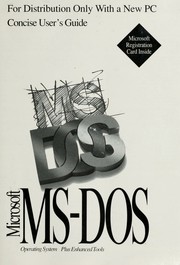 Userʼs GuideMicrosoft Press, Chris DeVoney · 1984
 C# 4.0 unleashedBart De Smet · 2011
 Microsoft Windows server 2012 inside outWilliam R. Stanek · 2012
 Name What BrokeRavi Vale · 2026
 Beginning PowerShell for SharePoint 2013Nikolas Charlebois-Laprade · 2014
Ranked by number of editions on Open Library, a rough measure of how lasting a book is.
🔗 Related topics
- DNS root zone In computing and the Internet, the DNS root zone is the top-level DNS zone in the hierarchical namespace of the Domain Name System (DNS). Before October…
- Domain Name System The Domain Name System (DNS) is a hierarchical and distributed name service that provides a naming system for computers, services, and other resources…
- Top-level domain A top-level domain (TLD) is one of the domains at the highest level in the hierarchical Domain Name System of the Internet after the root domain. The top-level…
- WHOIS WHOIS (pronounced as the phrase "who is") is a query and response protocol that is used for querying databases that store an Internet resource's registered…
- Domain name In the Internet, a domain name is a string that identifies a realm of administrative autonomy, authority, or control. Domain names are often used to identify…
- DNS zone A DNS zone is a specific portion of the DNS namespace in the Domain Name System (DNS), which a specific organization or administrator manages. A DNS zone…
- Alternative DNS root The Internet uses the Domain Name System (DNS) to associate numeric computer IP addresses with human-readable names. The top level of the domain name hierarchy…
- Anycast Anycast is a network addressing and routing methodology in which a single IP address is shared by devices (generally servers) in multiple locations. Routers…