Everything about Domain Name System
System to identify resources on a network
The Domain Name System (DNS) is a hierarchical and distributed name service that provides a naming system for computers, services, and other resources on the Internet or other Internet Protocol (IP) networks. It associates various information with domain names assigned to each of the associated entities. Most prominently, it translates readily memorized domain names to the numerical IP addresses needed for locating and identifying computer services and devices with the underlying network protocols. The Domain Name System has been an essential component of the functionality of the Internet since 1985. Wikipedia →
🧭 Start here: a 6-step reading path
- Read the overview: Domain Name SystemA 5-minute orientation
- Skim a recent paper: Securing Networks Against Adversarial Domain Name System Tunneling Attacks Using Hybrid Neural NetworksInfluential work since 2022
- Pick up a classic book: DNS and BINDThe most-reprinted book on the subject
- Read the landmark paper: Development of the domain name systemCited 82 times
- Go sideways: Name serverA closely related topic
- Go sideways: Comparison of DNS server softwareA closely related topic
📖 Definitions
No dictionary entry for this exact phrase.
🏆 Landmark papers (most cited)
Development of the domain name system
Domain name system security and privacy: A contemporary survey
A survey of domain name system vulnerabilities and attacks
Development of the Domain Name System
Maintaining Strong Cache Consistency for the Domain Name System
Privacy by Infrastructure: The Unresolved Case of the Domain Name System
Measuring the global domain name system
Fast3DS: A real-time full-convolutional malicious domain name detection system
🆕 Influential since 2022
Securing Networks Against Adversarial Domain Name System Tunneling Attacks Using Hybrid Neural Networks
Use chains to block DNS attacks: A trusty blockchain-based domain name system
DNS-BC: Fast, Reliable and Secure Domain Name System Caching System Based on a Consortium Blockchain
An unsupervised machine learning approach for cyber threat detection using geographic profiling and Domain Name System data
Controlling digital piracy via domain name system blocks: A natural experiment
📚 Books worth reading
 DNS and BINDPaul Albitz, Cricket Liu · 1996
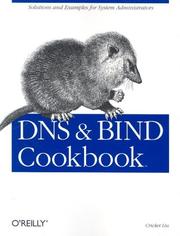 DNS and BIND cookbookCricket Liu · 2002
 Data Communications Networking (McGraw-Hill Forouzan Networking)Behrouz A. Forouzan · 2006
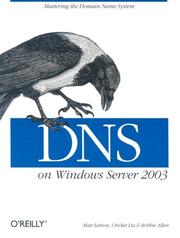 DNS on Windows Server 2003Matt Larson · 2003
 DNS for DummiesBlair Rampling, David Dalan · 2002
 Casebook InternetrechtDetlef Kröger, Detlef Kröger · 2003
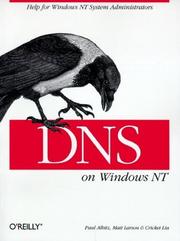 DNS on Windows NTPaul Albitz · 1998
 Windows 2000 DNSRoger Abell, Herman Knief · 2000
Ranked by number of editions on Open Library, a rough measure of how lasting a book is.
🔗 Related topics
- Name server A name server is a computer application that implements a network service for providing responses to queries against a directory service. It translates…
- Comparison of DNS server software This article presents a comparison of the features, platform support, and packaging of many independent implementations of Domain Name System (DNS) name…
- Domain Name System Security Extensions The Domain Name System Security Extensions (DNSSEC) is a suite of extension specifications by the Internet Engineering Task Force (IETF) for securing data…
- DNS spoofing DNS spoofing, also referred to as DNS cache poisoning, is a form of computer security hacking in which corrupt Domain Name System data is introduced into…
- Root name server In networking, a root name server is a name server for the root zone of the Domain Name System (DNS) of the Internet. It directly answers requests for…
- DNS zone A DNS zone is a specific portion of the DNS namespace in the Domain Name System (DNS), which a specific organization or administrator manages. A DNS zone…
- DNS root zone In computing and the Internet, the DNS root zone is the top-level DNS zone in the hierarchical namespace of the Domain Name System (DNS). Before October…
- Time to live Time to live (TTL) or hop limit is a mechanism which limits the lifespan or lifetime of data in a computer or network. TTL may be implemented as a counter…