Live briefing
Everything about Robust control
Approach to controller design that explicitly deals with uncertainty
A central theme of control theory is feedback regulation — the design of a feedback controller to achieve stability and a level of performance for a given dynamical system. Tolerance to modeling uncertainty is an essential part of any feedback control scheme, that is, the ability to maintain a satisfactory level of performance when the system dynamics deviate from the nominal value used in the design. The ability of a feedback control system to maintain stability and performance under uncertainty is referred to as robustness. Wikipedia →
🧭 Start here: a 6-step reading path
- Read the overview: Robust controlA 5-minute orientation
- Skim a recent paper: Robust Control Strategies for Microgrids: A ReviewInfluential work since 2022
- Pick up a classic book: Control and Dynamic SystemsThe most-reprinted book on the subject
- Read the landmark paper: A robust layered control system for a mobile robotCited 4,924 times
- Go sideways: Control theoryA closely related topic
- Go sideways: Quantitative feedback theoryA closely related topic
📖 Definitions
No dictionary entry for this exact phrase.
🗂️ The subject at a glance
🏆 Landmark papers (most cited)
A robust layered control system for a mobile robot
Efficient robust predictive control
Robust Control Charts
Robust Time-Delay Control
Robust nonlinear integral control
Bibliography on robust control
Robust CUSUM Control Charting
Robust automatic generation control
🆕 Influential since 2022
📚 Books worth reading
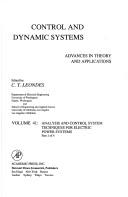 Control and Dynamic SystemsCornelius T. Leondes · 1985
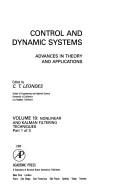 Control and Dynamic SystemsCornelius T. Leondes · 1982
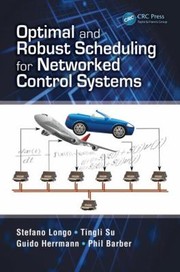 Optimal And Robust Scheduling For Networked Control SystemsStefano Longo · 2013
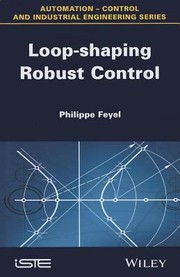 Loopshaping Robust ControlPhilippe Feyel · 2013
 Robust Control Systems with Genetic AlgorithmsMo Jamshidi, Renato A. Krohling · 2002
 Robust Power System Frequency ControlHassan Bevrani · 2009
 Model predictive controlE. F. Camacho, Eduardo F. Camacho · 1999
 Robust Output LQ Optimal Control via Integral Sliding ModesLeonid Fridman, Alexander Poznyak · 2014
Ranked by number of editions on Open Library, a rough measure of how lasting a book is.
🔗 Related topics
- Control theory Control theory is a field of control engineering and applied mathematics that deals with the control of dynamical systems. The aim is to develop a model…
- Quantitative feedback theory In control theory, quantitative feedback theory (QFT), developed by Isaac Horowitz (Horowitz, 1963; Horowitz and Sidi, 1972), is a frequency domain technique…
- Iso-damping Iso-damping is a desirable system property referring to a state where the open-loop phase Bode plot is flat—i.e., the phase derivative with respect to…
- H-infinity loop-shaping H-infinity loop-shaping is a design methodology in modern control theory. It combines the traditional intuition of classical control methods, such as Bode's…
- H-infinity methods in control theory H∞ (i.e. "H-infinity") methods are used in control theory to synthesize controllers to achieve stabilization with guaranteed performance. To use H∞ methods…
- Outline of control engineering The following outline is provided as an overview of and topical guide to control engineering: Control engineering – engineering discipline that applies…
- Feedback Feedback occurs when outputs of a system are routed back as inputs as part of a chain of cause and effect that forms a circuit or loop. The system can…
- Bode plot In electrical engineering and control theory, a Bode plot is a graph of the frequency response of a system. It is usually a combination of a Bode magnitude…