Everything about Feedback
Process where information about current status is used to influence future status

Feedback occurs when outputs of a system are routed back as inputs as part of a chain of cause and effect that forms a circuit or loop. The system can then be said to feed back into itself. The notion of cause-and-effect has to be handled carefully when applied to feedback systems:Simple causal reasoning about a feedback system is difficult because the first system influences the second and second system influences the first, leading to a circular argument. This makes reasoning based upon cause and effect tricky, and it is necessary to analyze the system as a whole. As provided by Webster, feedback in business is the transmission of evaluative or corrective information about an action, event, or process to the original or controlling source. Wikipedia →
🧭 Start here: a 6-step reading path
- Read the overview: FeedbackA 5-minute orientation
- Skim a recent paper: Positive feedback regulation of microglial glucose metabolism by histone H4 lysine 12 lactylation in Alzheimer’s diseaseInfluential work since 2022
- Pick up a classic book: Modern control systemsThe most-reprinted book on the subject
- Read the landmark paper: The Power of FeedbackCited 9,975 times
- Go sideways: Positive feedbackA closely related topic
- Go sideways: Electronic oscillatorA closely related topic
📖 Definitions
Noun Critical assessment of a process or activity or of their results.
Noun The part of an output signal that is looped back into the input to control or modify a system.
Noun The high-pitched howling noise heard when there is a loop between a microphone and a speaker.
Verb To generate the high-frequency sound by allowing a speaker to cause vibration of the sound generator of a musical instrument connected by an amplifier to the speaker.
🗂️ The subject at a glance
🏆 Landmark papers (most cited)
The Power of Feedback
Nonlinear Feedback Design for Fixed-Time Stabilization of Linear Control Systems
The updated Consolidated Framework for Implementation Research based on user feedback
The effects of feedback interventions on performance: A historical review, a meta-analysis, and a preliminary feedback intervention theory.
Formative assessment and self‐regulated learning: a model and seven principles of good feedback practice
Higher-order sliding modes, differentiation and output-feedback control
Focus on Formative Feedback
Climate change and the permafrost carbon feedback
🆕 Influential since 2022
Positive feedback regulation of microglial glucose metabolism by histone H4 lysine 12 lactylation in Alzheimer’s disease
Observer-Based Neuro-Adaptive Optimized Control of Strict-Feedback Nonlinear Systems With State Constraints
AI-generated feedback on writing: insights into efficacy and ENL student preference
Command Filter-Based Adaptive Fuzzy Finite-Time Output Feedback Control of Nonlinear Electrohydraulic Servo System
Augmented tactile-perception and haptic-feedback rings as human-machine interfaces aiming for immersive interactions
📚 Books worth reading
 Modern control systemsRichard C. Dorf, Richard C Dorf · 1967
 Time Series AnalysisGeorge E. P. Box, Gwilym M. Jenkins · 1970
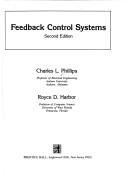 Feedback control systems 5th EditionPhillips, Charles L., Charles L. Phillips · 1969
 Automatic control systemsBenjamin C. Kuo · 1962
 Radical CandorKim Malone Scott · 2017
 Modern control systemsRichard C. Dorf · 1967
 Feedback control of dynamic systemsGene F. Franklin · 2008
 Feedback control of dynamic systemsGene F. Franklin · 1986
Ranked by number of editions on Open Library, a rough measure of how lasting a book is.
🔗 Related topics
- Positive feedback Positive feedback (exacerbating feedback, self-reinforcing feedback) is a process that occurs in a feedback loop where the outcome of a process reinforces…
- Electronic oscillator An electronic oscillator is an electronic circuit that produces a periodic, oscillating or alternating current (AC) signal, usually a sine wave, square…
- RC oscillator Linear electronic oscillator circuits, which generate a sinusoidal output signal, are composed of an amplifier and a frequency selective element, a filter…
- Parasitic oscillation Parasitic oscillation is an unintended self-sustaining oscillation in an electronic circuit, typically caused by unintentional feedback combined with sufficient…
- Negative feedback Negative feedback (or balancing feedback) occurs when some function of the output of a system, process, or mechanism is fed back in a manner that tends…
- Phase margin In electronic amplifiers, the phase margin (PM) is the difference between the phase lag φ (< 0) and -180°, for an amplifier's output signal (relative to…
- Flip-flop (electronics) In electronics, flip-flops and latches are circuits that have two stable states that can store state information – a bistable multivibrator. The circuit…
- Phase-locked loop A phase-locked loop (PLL) is a control system that generates an output signal whose phase is fixed relative to the phase of an input signal. Keeping the…