Everything about Research program
Professional network conducting research
A research program is a professional network of scientists conducting basic research. The term was used by philosopher of science Imre Lakatos to blend and revise the normative model of science offered by Karl Popper's The Logic of Scientific Discovery and the descriptive model of science offered by Thomas Kuhn's The Structure of Scientific Revolutions. Lakatos found falsificationism impractical and often not practiced, and found normal science—where a paradigm of science, mimicking an exemplar, extinguishes differing perspectives—more monopolistic than actual. Wikipedia →
🧭 Start here: a 6-step reading path
- Read the overview: Research programA 5-minute orientation
- Skim a recent paper: Genomic data in the All of Us Research ProgramInfluential work since 2022
- Pick up a classic book: NASA/DoD aerospace knowledge diffusion research projectThe most-reprinted book on the subject
- Read the landmark paper: A Research ProgramCited 2 times
- Go sideways: Imre LakatosA closely related topic
- Go sideways: Normal scienceA closely related topic
📖 Definitions
No dictionary entry for this exact phrase.
🗂️ The subject at a glance
No outline available.
🏆 Landmark papers (most cited)
A Research Program
Program Evaluation Research
Research Consortium Program
Research Program
Research Program
Research program
RESEARCH PROGRAM
Research Program
🆕 Influential since 2022
📚 Books worth reading
 NASA/DoD aerospace knowledge diffusion research projectThomas E. Pinelli · 1990
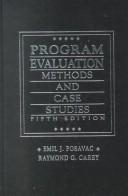 Program evaluationEmil J. Posavac, Raymond G. Carey · 1980
 SPSS Survival ManualJulie Pallant · 2001
 Marketing researchNaresh K. Malhotra, SPSS SPSS · 1993
 Evaluating Research in Academic JournalsFred Pyrczak · 1999
 HackersSteven Levy · 1984
 Foundations of nursing researchRose Marie Nieswiadomy · 1987
 Operations researchHamdy A. Taha · 1971
Ranked by number of editions on Open Library, a rough measure of how lasting a book is.
🔗 Related topics
- Imre Lakatos Imre Lakatos (UK: /ˈlækətɒs/, US: /-toʊs/; Hungarian: Lakatos Imre [ˈlɒkɒtoʃ ˈimrɛ]; 9 November 1922 – 2 February 1974) was a Hungarian-born philosopher…
- Normal science Normal science, identified and elaborated on by Thomas Samuel Kuhn in The Structure of Scientific Revolutions, is the regular work of scientists theorizing…
- Paradigm In science and philosophy, a paradigm (/ˈpærədaɪm/ PARR-ə-dyme) is a distinct set of concepts or thought patterns, including theories, research methods…
- Bold hypothesis Bold hypothesis (or bold conjecture, the terms are used interchangeably) is a concept originally created by the liberal philosopher Karl Popper when he…
- Constructivism in science education Constructivism has been considered as a dominant paradigm, or research programme, in the field of science education since the 1980s. The term constructivism…
- Scientific community metaphor In computer science, the scientific community metaphor is a metaphor used to aid understanding scientific communities. The first publications on the scientific…
- Paradigm shift A paradigm shift is a fundamental change in the basic concepts and experimental practices of a scientific discipline. It is a concept in the philosophy…
- The Structure of Scientific Revolutions The Structure of Scientific Revolutions is a 1962 book about the history of science by the philosopher Thomas S. Kuhn. Its publication was a landmark event…