Everything about Redundant binary representation
A redundant binary representation (RBR) is a numeral system that uses more bits than needed to represent a single binary digit so that most numbers have several representations. An RBR is unlike usual binary numeral systems, including two's complement, which use a single bit for each digit. Many of an RBR's properties differ from those of regular binary representation systems. Most importantly, an RBR allows addition without using a typical carry. When compared to non-redundant representation, an RBR makes bitwise logical operation slower, but arithmetic operations are faster when a greater bit width is used. Usually, each digit has its own sign that is not necessarily the same as the sign of the number represented. When digits have signs, that RBR is also a signed-digit representation. Wikipedia →
🧭 Start here: a 6-step reading path
- Read the overview: Redundant binary representationA 5-minute orientation
- Skim a recent paper: A Scalable Montgomery Modular Multiplication Architecture with Low Area-Time Product Based on Redundant Binary RepresentationInfluential work since 2022
- Pick up a classic book: Data Communications and NetworkingThe most-reprinted book on the subject
- Read the landmark paper: Accurate rounding scheme for the Newton-Raphson method using redundant binary representationCited 34 times
- Go sideways: Signed number representationsA closely related topic
- Go sideways: Bitwise operationA closely related topic
📖 Definitions
No dictionary entry for this exact phrase.
🗂️ The subject at a glance
🏆 Landmark papers (most cited)
Accurate rounding scheme for the Newton-Raphson method using redundant binary representation
On-Line Error-Detectable High-Speed Multiplier Using Redundant Binary Representation and Three-Rail Logic
A High-Performance and Low-Cost Montgomery Modular Multiplication Based on Redundant Binary Representation
Time efficient signed Vedic multiplier using redundant binary representation
A hardware algorithm for computing sine and cosine using redundant binary representation
Redundant binary number representation for an inherently parallel arithmetic on optical computers
Correcting the Normalization Shift of Redundant Binary Representations
Efficient Conversion Technique from Redundant Binary to NonRedundant Binary Representation
🆕 Influential since 2022
📚 Books worth reading
 Data Communications and NetworkingBehrouz A. Forouzan, Catherine Ann Coombs · 2000
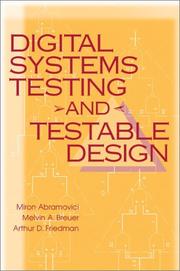 Digital systems testing and testable designMiron Abramovici · 1990
 Beginning COBOL for ProgrammersMichael Coughlan · 2014
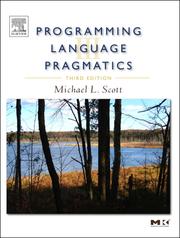 Programming Language PragmaticsMichael Lee Scott · 2009
Ranked by number of editions on Open Library, a rough measure of how lasting a book is.
🔗 Related topics
- Signed number representations In computing, signed number representations are required to encode negative numbers in binary number systems. In mathematics, negative numbers in any base…
- Bitwise operation In computer programming, a bitwise operation operates on a bit string, a bit array or a binary numeral (considered as a bit string) at the level of its…
- Two's complement Two's complement is the most common method of representing signed (positive, negative, and zero) integers on computers, and more generally, fixed point…
- IEEE 754 The IEEE Standard for Floating-Point Arithmetic (IEEE 754) is a technical standard for floating-point arithmetic originally established in 1985 by the…
- Adder (electronics) An adder, or summer, is a digital circuit that performs addition of numbers. In many computers and other kinds of processors, adders are used in the arithmetic…
- Ones' complement The ones' complement of a binary number is the value obtained by inverting (flipping) all the bits in the number (that is, changing each 1 to a 0 and each…
- Ternary numeral system A ternary /ˈtɜːrnəri/ numeral system (also called base 3 or trinary) has three as its base. Although ternary most often refers to a system in which the…
- Binary-coded decimal In computing and electronic systems, binary-coded decimal (BCD) is a class of binary encodings of decimal numbers where each digit is represented by a…