Everything about Reason
Capacity for consciously making sense of things
Reason is the capacity to consciously apply logic by drawing valid conclusions from new or existing information, with the aim of seeking truth. It is associated with activities considered characteristic of humans, including philosophy, religion, science, language, and mathematics, and is generally considered a distinguishing ability possessed by humans. The term "reason" is sometimes used to refer to rationality, although the latter is more about its application. Wikipedia →
🧭 Start here: a 6-step reading path
- Read the overview: ReasonA 5-minute orientation
- Skim a recent paper: Can large language models reason about medical questions?Influential work since 2022
- Pick up a classic book: Kritik der praktischen VernunftThe most-reprinted book on the subject
- Read the landmark paper: Risk as Analysis and Risk as Feelings: Some Thoughts about Affect, Reason, Risk, and RationalityCited 2,789 times
- Go sideways: Inductive reasoningA closely related topic
- Go sideways: Logic and rationalityA closely related topic
📖 Definitions
Noun A cause:
Noun That which causes something: an efficient cause, a proximate cause.
Noun A motive for an action or a determination.
Noun An excuse: a thought or a consideration offered in support of a determination or an opinion; that which is offered or accepted as an explanation.
🏆 Landmark papers (most cited)
Risk as Analysis and Risk as Feelings: Some Thoughts about Affect, Reason, Risk, and Rationality
Health Care–Associated Bloodstream Infections in Adults: A Reason To Change the Accepted Definition of Community-Acquired Infections
The logic of social exchange: Has natural selection shaped how humans reason? Studies with the Wason selection task
Why do humans reason? Arguments for an argumentative theory
The specificity of the scientific field and the social conditions of the progress of reason
Reason-based choice
The psychology of doing nothing: Forms of decision avoidance result from reason and emotion.
More than one reason to rethink the use of peptides in vaccine design
🆕 Influential since 2022
Can large language models reason about medical questions?
Learning to Compose and Reason with Language Tree Structures for Visual Grounding
Identity Threats as a Reason for Resistance to Artificial Intelligence: Survey Study With Medical Students and Professionals
Mitochondrial Oxidative Stress Is the General Reason for Apoptosis Induced by Different-Valence Heavy Metals in Cells and Mitochondria
No reason to expect large and consistent effects of nudge interventions
📚 Books worth reading
 Kritik der praktischen VernunftImmanuel Kant · 1788
 The art of logical thinkingWilliam Walker Atkinson · 1909
 Thinking, Fast and SlowDaniel Kahneman · 2011
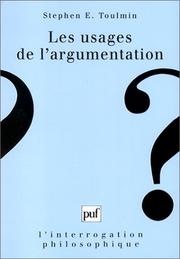 The uses of argumentStephen Edelston Toulmin · 1958
 Critical ThinkingTracy Bowell · 2001
 Logic and contemporary rhetoricHoward Kahane, Nancy M. Cavender · 1971
 Reason and emotionMacmurray, John · 1935
 A practical study of argumentTrudy Govier · 1985
Ranked by number of editions on Open Library, a rough measure of how lasting a book is.
🔗 Related topics
- Inductive reasoning Inductive reasoning refers to a variety of methods of reasoning in which the conclusion of an argument is supported with some degree of probability, but…
- Logic and rationality As the study of argument is of clear importance to the reasons that we hold things to be true, logic is of essential importance to rationality. Arguments…
- Empiricism Empiricism is an epistemological view in philosophy which holds that true knowledge or justification comes either only or primarily from sensory experience…
- Problem of induction The problem of induction is a philosophical problem that questions the rationality of predictions about unobserved things based on previous observations…
- Common sense Common sense (from Latin sensus communis) is "knowledge, judgement, and taste which is more or less universal and which is held more or less without reflection…
- Will (philosophy) Will, within philosophy, is a faculty of the mind. Will is important as one of the parts of the mind, along with reason and understanding. It is considered…
- Fallibilism Originally, fallibilism (from Medieval Latin: fallibilis, "liable to error") is the philosophical principle that propositions can be accepted even though…
- Logical reasoning Logical reasoning is a form of thinking or information processing that aims to arrive at a conclusion in a rigorous way. It happens in the form of inferences…