Everything about Empiricism
Idea that knowledge comes only/mainly from sensory experience

Empiricism is an epistemological view in philosophy which holds that true knowledge or justification comes either only or primarily from sensory experience and empirical evidence. It is one of several competing views within epistemology, along with rationalism and skepticism. Empiricists argue that empiricism is a more reliable method of finding the truth than relying purely on logical reasoning, because humans have cognitive biases and limitations which lead to errors of judgement. Wikipedia →
🧭 Start here: a 6-step reading path
- Read the overview: EmpiricismA 5-minute orientation
- Skim a recent paper: Magic and Empiricism in Early Chinese RainmakingInfluential work since 2022
- Pick up a classic book: The Varieties of Religious ExperienceThe most-reprinted book on the subject
- Read the landmark paper: Main Trends in Recent Philosophy: Two Dogmas of EmpiricismCited 2,120 times
- Go sideways: Modern philosophyA closely related topic
- Go sideways: Empirical researchA closely related topic
📖 Definitions
Noun A doctrine which holds that the only or, at least, the most reliable source of human knowledge is experience, especially perception by means of the physical senses. (Often contrasted with rationalism.)
Noun A pursuit of knowledge purely through experience, especially by means of observation and sometimes by experimentation.
Noun Research methodology shaped from empirical philosophy (see above), e.g. surveys, statistics, etc.
Noun Medicine as practised by an empiric, founded on mere (personal or anecdotal) experience, without the aid of science or a knowledge of principles.
🗂️ The subject at a glance
🏆 Landmark papers (most cited)
Main Trends in Recent Philosophy: Two Dogmas of Empiricism
Science and empiricism in pile foundation design
BARS, BLOCKS, AND CRIMES REVISITED: LINKING THE THEORY OF ROUTINE ACTIVITIES TO THE EMPIRICISM OF “HOT SPOTS”*
Diversity and Stability of Ecological Communities: A Comment on the Role of Empiricism in Ecology
Acupuncture — from empiricism to science: Functional background to acupuncture effects in pain and disease Pain and disease
Climate gentrification: from theory to empiricism in Miami-Dade County, Florida
Disturbance, productivity, and species diversity: empiricism vs. logic in ecological theory
Chemistry Education Research─From Personal Empiricism to Evidence, Theory, and Informed Practice
🆕 Influential since 2022
Magic and Empiricism in Early Chinese Rainmaking
TTP: From empiricism for an enigmatic disease to targeted molecular therapies
CLARINET: A quire-enabled RISC-V-based framework for posit arithmetic empiricism
A novel method for subgrade cumulative deformation prediction of high-speed railways based on empiricism-constrained neural network and SHapley Additive exPlanations analysis
The Beliefs of Nonbelievers: Exclusive Empiricism and Mortal Finitude Among Atheists and Agnostics
📚 Books worth reading
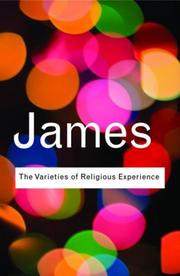 The Varieties of Religious ExperienceWilliam James, Dr. William James · 1817
 Experience and natureJohn Dewey · 1925
 Essays and treatises on several subjectsDavid Hume · 1753
 Art as ExperienceJohn Dewey · 1934
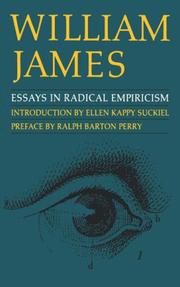 Essays in radical empiricismWilliam James · 1912
 Essays in radical empiricism [and] A pluralistic universeWilliam James · 1943
 The Routledge Companion To Philosophy Of ScienceMartin Curd, Stathis Psillos · 2008
 Kant and his English criticsJohn Watson · 1881
Ranked by number of editions on Open Library, a rough measure of how lasting a book is.
🔗 Related topics
- Modern philosophy Modern philosophy is philosophy developed in the modern era and associated with modernity. It is not a specific doctrine or school (and thus should not…
- Empirical research Empirical research is research using empirical evidence. It is also a way of gaining knowledge by means of direct and indirect observation or experience…
- Idea An idea (from the Greek word: ἰδέα (idea), meaning 'a form, or a pattern') is the result of thought. Although the word is used in common usage, in philosophy…
- Instrumentalism In philosophy of science and in epistemology, instrumentalism is a methodological view that ideas are useful instruments, and that the worth of an idea…
- Rationalism In philosophy, rationalism is the epistemological view that "regards reason as the chief source and test of knowledge" or "the position that reason has…
- Phenomenalism In metaphysics, phenomenalism is the view that physical objects cannot justifiably be said to exist as "things-in-themselves", but only as perceptual phenomena…
- Scottish philosophy Scottish philosophy is a philosophical tradition created by philosophers belonging to Scottish universities. Although many philosophers such as Francis…
- Empirical evidence Empirical evidence is evidence obtained through sense experience or experimental procedure. It is of central importance to the sciences and plays a role…