Everything about Real-time operating system
Computer operating system for applications with critical timing constraints
A real-time operating system (RTOS) is an operating system (OS) for real-time computing applications that processes data and events that have critically defined time constraints. An RTOS mainly targets resource constrained devices like microcontrollers. It is distinct from a time-sharing operating system, such as Unix, which manages the sharing of system resources with a scheduler, data buffers, or fixed task prioritization in multitasking or multiprogramming environments. All operations must verifiably complete within given time and resource constraints or else the RTOS will fail safe. Real-time operating systems are event-driven and preemptive, meaning the OS can monitor the relevant priority of competing tasks, and make changes to the task priority. Wikipedia →
🧭 Start here: a 6-step reading path
- Read the overview: Real-time operating systemA 5-minute orientation
- Skim a recent paper: Real-time dispatching of operating buses during unplanned disruptions to urban rail transit systemInfluential work since 2022
- Pick up a classic book: IEEE standard for information technologyThe most-reprinted book on the subject
- Read the landmark paper: Thoth, a portable real-time operating systemCited 119 times
- Go sideways: Micro-Controller Operating SystemsA closely related topic
- Go sideways: DioneOSA closely related topic
📖 Definitions
No dictionary entry for this exact phrase.
🏆 Landmark papers (most cited)
Thoth, a portable real-time operating system
Real-Time Operating Systems
The real-time operating system of MARS
A hardware-software real-time operating system framework for SoCs
The MARUTI hard real-time operating system
A real-time monitor for a distributed real-time operating system
Reliable Real-Time Operating System for IoT Devices
A distributed real-time operating system
🆕 Influential since 2022
Real-time dispatching of operating buses during unplanned disruptions to urban rail transit system
Exploration of Power-Savings on Multi-Core Architectures With Offloaded Real-Time Operating System
Architecture of the Graphics System for Embedded Real-Time Operating Systems
Insights Into Seismicity Associated With Flexibly Operating Enhanced Geothermal System From Real‐Time Distributed Acoustic Sensing
Compounded Real-Time Operating Systems for Rich Real-Time Applications
📚 Books worth reading
 IEEE standard for information technologyInstitute of Electrical and Electronics Engineers · 1991
 Real-time system design and analysisPhillip A. Laplante · 1992
- 📕Real-time embedded systemsIvan Cibrario Bertolotti · 2012
- 📕The embedded operating system projectRoy Harold Campbell · 1984
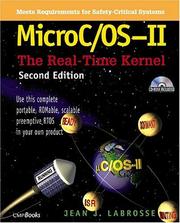 MicroC/OS-IIJean J. Labrosse · 1998
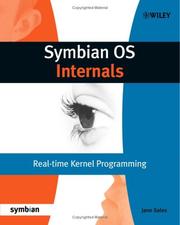 Symbian OS internalsJane Sales · 2005
- 📕Windows Embedded CE 6.0 fundamentalsS. A. Pavlov · 2008
 Real-time management of resource allocation systemsSpyros A. Reveliotis · 2004
Ranked by number of editions on Open Library, a rough measure of how lasting a book is.
🔗 Related topics
- Micro-Controller Operating Systems Micro-Controller Operating Systems (MicroC/OS, stylized as μC/OS, or Micrium OS) is a real-time operating system (RTOS) designed by Jean J. Labrosse in…
- DioneOS DioneOS (pronounced /djoneos/) is a multitasking preemptive, real-time operating system (RTOS). The system is designed for microcontrollers, originally…
- Scheduling (computing) In computing, scheduling is the action of assigning resources to perform tasks. The resources may be processors, network links or expansion cards. The…
- RTLinux RTLinux is a hard real-time operating system (RTOS) microkernel that runs the entire Linux operating system as a fully preemptive process. The hard real-time…
- Context switch In computing, a context switch is the process of storing the state of a process or thread, so that it can be restored and resume execution at a later point…
- Computer multitasking In computing, multitasking is the concurrent execution of multiple tasks (also known as processes) over a certain period of time. New tasks can interrupt…
- Preemption (computing) In computing, preemption is the act performed by an external scheduler — without assistance or cooperation from the task — of temporarily interrupting…
- Nano-RK Nano-RK is a wireless sensor networking real-time operating system (RTOS) from Carnegie Mellon University, designed to run on microcontrollers for use…