Live briefing
Everything about Pulse-density modulation
Form of modulation
Pulse-density modulation (PDM) is a form of modulation used to represent an analog signal with a binary signal. In a PDM signal, specific amplitude values are not encoded into codewords of pulses of different weights as they would be in pulse-code modulation (PCM); rather, the relative density of the pulses corresponds to the analog signal's amplitude. Wikipedia →
🧭 Start here: a 6-step reading path
- Read the overview: Pulse-density modulationA 5-minute orientation
- Skim a recent paper: An Improved Pulse Density Modulation Control for Secondary Side Controlled Wireless Power Transfer System Using LCC-S CompensationInfluential work since 2022
- Pick up a classic book: Precision measurement and calibrationThe most-reprinted book on the subject
- Read the landmark paper: Pulse Density Modulation for Maximum Efficiency Point Tracking of Wireless Power Transfer SystemsCited 206 times
- Go sideways: Delta-sigma modulationA closely related topic
- Go sideways: Delta modulationA closely related topic
📖 Definitions
No dictionary entry for this exact phrase.
🏆 Landmark papers (most cited)
Pulse Density Modulation for Maximum Efficiency Point Tracking of Wireless Power Transfer Systems
Improving the Efficiency of IGBT Series-Resonant Inverters Using Pulse Density Modulation
Computer-generated holograms with pulse-density modulation
Pulse-density modulation technique in VLSI implementations of neural network algorithms
Spread spectrum modulation scheme for two-level inverter using vector quantised space vector-based pulse density modulation
An Improved Pulse Density Modulation of High-Frequency Inverter in ICPT System
Conditional Pulse Density Modulation for Inductive Power Transfer Systems
An Improved Pulse Density Modulation Strategy Based on Harmonics for ICPT System
🆕 Influential since 2022
An Improved Pulse Density Modulation Control for Secondary Side Controlled Wireless Power Transfer System Using LCC-S Compensation
Pulse Density Modulation Based Mutual Inductance and Load Resistance Identification Method for Wireless Power Transfer System
A Pulse Density Modulation Based Receiver Reactance Identification Method for Wireless Power Transfer System
Fuzzy Logic Controlled Pulse Density Modulation Technique for Bidirectional Inductive Power Transfer Systems
Hybrid Control Based on Pulse Density Modulation and Asymmetrical Voltage Cancellation for WPT Systems
📚 Books worth reading
 Precision measurement and calibrationUnited States. National Bureau of Standards. · 1961
 Treaty Occupationay ToxicologySuelen Queiroz · 2010
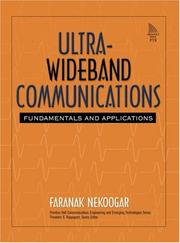 Ultra-Wideband CommunicationsFaranak Nekoogar · 2005
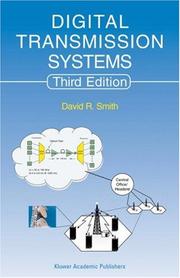 Digital transmission systemsDavid Russell Smith · 1985
- 📕Analog computation based on random pulse density modulationGary George Albert Black · 1974
- 📕Computer-generated fourier holograms based on pulse-density modulationPierre Marie Theodoor van den Bulck · 1994
 Theoretical and technological advancements in nanotechnology and molecular computationBruce J. MacLennan · 2011
 Introduction to the finite-difference time-domain (FDTD) method for electromagneticsStephen Douglas Gedney · 2011
Ranked by number of editions on Open Library, a rough measure of how lasting a book is.
🔗 Related topics
- Delta-sigma modulation Delta–sigma (ΔΣ; or sigma–delta, ΣΔ) modulation is an oversampling method for encoding signals into low bit depth digital signals at a very high sample-frequenc…
- Delta modulation Delta modulation (DM, ΔM, or Δ-modulation) is an analog-to-digital and digital-to-analog signal conversion technique used for transmission of voice information…
- Signal modulation Signal modulation is the process of varying one or more properties of a periodic waveform in electronics and telecommunication for the purpose of transmitting…
- Noise shaping In signal processing, noise shaping is a technique typically used when processing digital audio, image, and video signals. It is usually used in combination…
- Pulse-code modulation Pulse-code modulation (PCM) is a method used to digitally represent analog signals. It is the standard form of digital audio in computers, compact discs…
- Continuously variable slope delta modulation Continuously variable slope delta modulation (CVSD or CVSDM) is a voice coding method. It is a delta modulation with variable step size (i.e., special…
- Quantization (signal processing) In mathematics and digital signal processing, quantization is the process of mapping input values from a large set (often a continuous set) to output values…
- Pulse-width modulation Pulse-width modulation (PWM), also known as pulse-duration modulation (PDM) or pulse-length modulation (PLM), is any method of representing a signal as…