Live briefing
Everything about Proof-carrying code
Proof-carrying code (PCC) is a software mechanism that allows a host system to verify properties about an application via a formal proof that accompanies the application's executable code. The host system can quickly verify the validity of the proof, and it can compare the conclusions of the proof to its own security policy to determine whether the application is safe to execute. This can be particularly useful in ensuring memory safety. Wikipedia →
🧭 Start here: a 6-step reading path
- Read the overview: Proof-carrying codeA 5-minute orientation
- Pick up a classic book: The Conspirators HierarchyThe most-reprinted book on the subject
- Read the landmark paper: An indexed model of recursive types for foundational proof-carrying codeCited 250 times
- Go sideways: Language-based securityA closely related topic
- Go sideways: George NeculaA closely related topic
📖 Definitions
No dictionary entry for this exact phrase.
🗂️ The subject at a glance
🏆 Landmark papers (most cited)
An indexed model of recursive types for foundational proof-carrying code
Proof-carrying code from certified abstract interpretation and fixpoint compression
A Syntactic Approach to Foundational Proof-Carrying Code
Bytecode Analysis for Proof Carrying Code
Garbage Collector Verification for Proof-Carrying Code
Enforcing Security and Safety with Proof-Carrying Code
A portable virtual machine target for proof-carrying code
Proof-carrying Bytecode
📚 Books worth reading
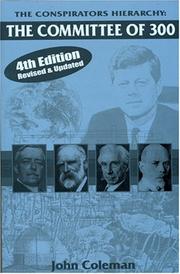 The Conspirators HierarchyJohn Coleman · 1992
 The history of Detroit and MichiganSilas Farmer · 1884
 The Church And The Moral WorldThébaud, Augustus J. · 1881
 A History Of Penance, Being A Study Of AuthoritiesOscar D. Watkins · 1920
 Life of the Cardinal de Cheverus, archbishop of BordeauxHamon, M. (André Jean Marie), 1795-1874 · 1839
 Building ConstructionB.C. Punmia · 2005
 Tackling Workplace InvestigationsRussell HR Consulting · 2013
 Tackling Workplace InvestigationsRussell HR Consulting · 2013
Ranked by number of editions on Open Library, a rough measure of how lasting a book is.
🔗 Related topics
- Language-based security In computer science, language-based security (LBS) is a set of techniques that may be used to strengthen the security of applications on a high level by…
- George Necula George Ciprian Necula is a Romanian computer scientist, engineer at Google, and former professor at the University of California, Berkeley who does research…
- Berkeley Packet Filter The Berkeley Packet Filter (BPF; also BSD Packet Filter, classic BPF or cBPF) is a network tap mechanism and packet filter which permits computer network…
- EBPF eBPF is a technology that can run programs in a privileged context such as the operating system kernel. It is the successor to the Berkeley Packet Filter…
- Device driver synthesis and verification Device drivers are programs which allow software or higher-level computer programs to interact with a hardware device. These software components act as…
- Kernel (operating system) A kernel is a computer program at the core of a computer's operating system that always has complete control over everything in the system. The kernel…
- Singularity (operating system) Singularity is an experimental operating system developed by Microsoft Research between July 9, 2003, and February 7, 2015. It was designed as a high dependabil…
- Rootkit A rootkit is a collection of typically malicious computer software designed to enable access to a computer or to part of its software that would not otherwise…