Live briefing
Everything about Language-based security
In computer science, language-based security (LBS) is a set of techniques that may be used to strengthen the security of applications on a high level by using the properties of programming languages. LBS is considered to enforce computer security on an application-level, making it possible to prevent vulnerabilities which traditional operating system security is unable to handle. Wikipedia →
🧭 Start here: a 6-step reading path
- Read the overview: Language-based securityA 5-minute orientation
- Skim a recent paper: Automatically Detect Software Security Vulnerabilities Based on Natural Language Processing Techniques and Machine Learning AlgorithmsInfluential work since 2022
- Pick up a classic book: Cryptography for Internet and database applicationsThe most-reprinted book on the subject
- Read the landmark paper: Language-based information-flow securityCited 1,438 times
- Go sideways: Program analysisA closely related topic
- Go sideways: Proof-carrying codeA closely related topic
📖 Definitions
No dictionary entry for this exact phrase.
🗂️ The subject at a glance
🏆 Landmark papers (most cited)
Language-based information-flow security
A Security Risk Taxonomy for Prompt-Based Interaction With Large Language Models
Formal Analysis of Language-Based Android Security Using Theorem Proving Approach
Extensible markup language keywords search based on security access control
Large Language Model-Based Security Situation Awareness for Smart Grid: Framework and Approaches
“Language-Based Security”
Classification of Big Data Security Based on Ontology Web Language
XSSA/ADL: An XML-Based Security Requirement Architecture Description Language
🆕 Influential since 2022
Automatically Detect Software Security Vulnerabilities Based on Natural Language Processing Techniques and Machine Learning Algorithms
LLM-Based Unknown Function Automated Modeling in Sensor-Driven Systems for Multi-Language Software Security Verification
CQLLM: A Framework for Generating CodeQL Security Vulnerability Detection Code Based on Large Language Model
NIDS-β*: an explainable large language based framework for contextual intrusion resilience in network security
Security architecture of smart grid knowledge question-answering systems based on large language models
📚 Books worth reading
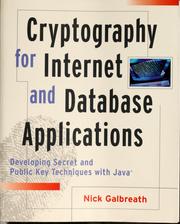 Cryptography for Internet and database applicationsNick Galbreath · 2002
- 📕COSPO/CENDI Industry Day ConferenceCOSPO/CENDI Industry Day Conference (1995 Alexandria, Va.) · 1995
- 📕Secure data provenance and inference control with semantic webBhavani M. Thuraisingham · 2015
- 📕Ŭiryo pohŏm ŭi pŏp chŏngch'aekNa-gyŏng Kim · 2012
Ranked by number of editions on Open Library, a rough measure of how lasting a book is.
🔗 Related topics
- Program analysis In computer science, program analysis is the process of analyzing the behavior of computer programs regarding a property such as correctness, robustness…
- Proof-carrying code Proof-carrying code (PCC) is a software mechanism that allows a host system to verify properties about an application via a formal proof that accompanies…
- Information flow (information theory) Information flow in an information theoretical context is the transfer of information from a variable x {\displaystyle x} to a variable y {\displaystyle…
- Dynamic program analysis Dynamic program analysis is the act of analyzing software that involves executing a program – as opposed to static program analysis, which does not execute…
- Compiler In computing, a compiler is software that translates computer code written in one programming language (the source language) into another language (the…
- Device driver synthesis and verification Device drivers are programs which allow software or higher-level computer programs to interact with a hardware device. These software components act as…
- Outline of computer programming The following outline is provided as an overview of and topical guide to computer programming: Computer programming – process that leads from an original…
- Optimizing compiler An optimizing compiler is a compiler designed to generate code that is optimized in aspects such as minimizing program execution time, memory usage, storage…