Live briefing
Everything about Zero-knowledge proof
Proving validity without revealing other data
In cryptography, a zero-knowledge proof is a protocol in which one party can convince another party that some given statement is true, without conveying to the verifier any information beyond the mere fact of that statement's truth. The intuition behind the nontriviality of zero-knowledge proofs is that it is trivial to prove possession of the relevant information simply by revealing it; the hard part is to prove this possession without revealing this information. Wikipedia →
🧭 Start here: a 6-step reading path
- Read the overview: Zero-knowledge proofA 5-minute orientation
- Skim a recent paper: zkFL: Zero-Knowledge Proof-Based Gradient Aggregation for Federated LearningInfluential work since 2022
- Pick up a classic book: Summa TheologicaThe most-reprinted book on the subject
- Read the landmark paper: The Knowledge Complexity of Interactive Proof SystemsCited 2,194 times
- Go sideways: Fiat–Shamir heuristicA closely related topic
- Go sideways: Non-interactive zero-knowledge proofA closely related topic
📖 Definitions
No dictionary entry for this exact phrase.
🏆 Landmark papers (most cited)
The Knowledge Complexity of Interactive Proof Systems
Definitions and properties of zero-knowledge proof systems
A Survey on Zero-Knowledge Proof in Blockchain
On the Composition of Zero-Knowledge Proof Systems
Efficient card-based zero-knowledge proof for Sudoku
A Privacy-Preserving Zero-Knowledge Proof for Blockchain
Preservice teachers’ knowledge of proof by mathematical induction
Card-Based Physical Zero-Knowledge Proof for Kakuro
🆕 Influential since 2022
zkFL: Zero-Knowledge Proof-Based Gradient Aggregation for Federated Learning
A Self-Sovereign Identity Based on Zero-Knowledge Proof and Blockchain
A Zero-Knowledge Proof-Enabled Blockchain-Based Academic Record Verification System
Physical zero-knowledge proof and NP-completeness proof of Suguru puzzle
Zero knowledge proof and ZK-SNARK for private blockchains
📚 Books worth reading
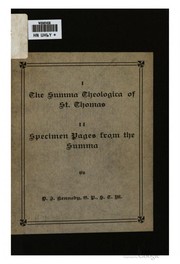 Summa TheologicaThomas Aquinas, Kennedy, Daniel Joseph, 1862-1930 · 1467
 Meditationes de prima philosophiaRené Descartes · 1642
 Truth, error, and criminal lawLarry Laudan · 2006
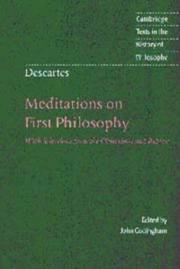
 Meditations on First PhilosophyRené Descartes · 2013
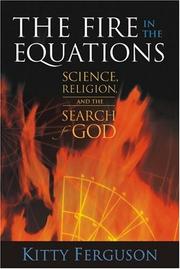 The fire in the equationsKitty Ferguson · 1994
- 📕Meditations on First PhilosophyRene Descartes · 2007
- 📕Dieu cachéFernand van Steenberghen · 1961
 Meditations on First PhilosophyRene Descartes · 2009
Ranked by number of editions on Open Library, a rough measure of how lasting a book is.
🔗 Related topics
- Fiat–Shamir heuristic In cryptography, the Fiat–Shamir heuristic, or Fiat–Shamir transformation, is a technique for taking an interactive proof of knowledge and creating a digital…
- Non-interactive zero-knowledge proof Non-interactive zero-knowledge proofs are cryptographic primitives, where information between a prover and a verifier can be authenticated by the prover…
- Feige–Fiat–Shamir identification scheme In cryptography, the Feige–Fiat–Shamir identification scheme is a type of parallel zero-knowledge proof developed by Uriel Feige, Amos Fiat, and Adi Shamir…
- Commitment scheme A commitment scheme is a cryptographic primitive that allows one to commit to a chosen value (or chosen statement) while keeping it hidden to others, with…
- Proof of knowledge In cryptography, a proof of knowledge is an interactive proof in which the prover succeeds in 'convincing' a verifier that the prover knows something.…
- Verifiable random function In cryptography, a verifiable random function (VRF) is a public-key pseudorandom function that provides proofs that its outputs were calculated correctly…
- Undeniable signature An undeniable signature is a digital signature scheme which allows the signer to be selective to whom they allow to verify signatures. The scheme adds…
- Silvio Micali Silvio Micali (born October 13, 1954) is an Italian computer scientist, professor at the Massachusetts Institute of Technology and the founder of Algorand…