Everything about Design
Plan for the construction of an object or system

A design is the concept or proposal for an object, process, or system. The word design refers to something that is or has been intentionally created by a thinking agent, and is sometimes used to refer to the inherent nature of something – its design. The verb to design expresses the process of developing a design. In some cases, the direct construction of an object without an explicit prior plan may also be considered to be a design, such as in arts and crafts. A design is expected to have a purpose within a specific context, typically aiming to satisfy certain goals and constraints while taking into account aesthetic, functional and experiential considerations. Traditional examples of designs are architectural and engineering drawings, circuit diagrams, sewing patterns, and less tangible artefacts such as business process models. Wikipedia →
🧭 Start here: a 6-step reading path
- Read the overview: DesignA 5-minute orientation
- Skim a recent paper: Self-Assembled Monolayers for Interfacial Engineering in Solution-Processed Thin-Film Electronic Devices: Design, Fabrication, and ApplicationsInfluential work since 2022
- Pick up a classic book: Cooperative Design, Visualization, and EngineeringThe most-reprinted book on the subject
- Read the landmark paper: A Social Information Processing Approach to Job Attitudes and Task DesignCited 4,375 times
- Go sideways: Design methodsA closely related topic
- Go sideways: User experience designA closely related topic
📖 Definitions
No dictionary entry for this exact phrase.
🗂️ The subject at a glance
🏆 Landmark papers (most cited)
A Social Information Processing Approach to Job Attitudes and Task Design
Designing the process design process
Collaborative process design
Lean Design Process
Integrated process design instruction
Optimal process capability analysis for process design
Thermal process design
Methodology of process design
🆕 Influential since 2022
Self-Assembled Monolayers for Interfacial Engineering in Solution-Processed Thin-Film Electronic Devices: Design, Fabrication, and Applications
Architectural Multispecies Building Design: Concepts, Challenges, and Design Process
DEXPI process: Standardizing interoperable information for process design and analysis
Torrefaction: Process Parameters and Reactor Design
Nanofood Process Technology: Insights on How Sustainability Informs Process Design
📚 Books worth reading
 Cooperative Design, Visualization, and EngineeringYuhua Luo · 2004
 Advances in ComputersMarshall C. Yovits · 1971
 Advances in ComputersAtif Memon · 2012
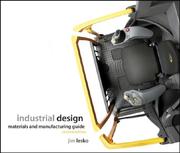 Industrial DesignJim Lesko · 1998
- 📕Programming.architecturePaul Coates · 2010
 The SketchUp Workflow for ArchitectureMichael Brightman · 2013
 How to Design ProgramsMatthias Felleisen · 2001
 Digital drawing for landscape architectureBradley Cantrell · 2010
Ranked by number of editions on Open Library, a rough measure of how lasting a book is.
🔗 Related topics
- Design methods Design methods are procedures, techniques, aids, or tools for designing. They offer a number of different kinds of activities that a designer might use…
- User experience design User experience design (UX design, UXD, UED, or XD), upon which is the centralized requirements for "User Experience Design Research" (also known as UX…
- Design thinking Design thinking refers to the set of cognitive, strategic and practical procedures used by designers in the process of designing, and to the body of knowledge…
- Service design Service design is the activity of planning and arranging people, infrastructure, communication, and material components of a service in order to improve…
- Ecological design Ecological design or ecodesign is an approach to designing products and services that gives special consideration to the environmental impacts of a product…
- User-centered design User-centered design (UCD) or user-driven development (UDD) is a framework of processes in which usability goals, user characteristics, environment, tasks…
- Systems design The basic study of system design is the understanding of component parts and their subsequent interaction with one another. Systems design has appeared…
- Design science Design science refers to a scientific, i.e. rational and systematic, approach to designing. An early concept of design science was introduced in 1957 by…