Live briefing

Everything about Prediction
Statement about a future event
A prediction or forecast is a statement about a future event or about future data. Predictions are often, but not always, based upon experience or knowledge of forecasters. There is no universal agreement about the exact difference between "prediction" and "estimation"; different authors and disciplines ascribe different connotations. Wikipedia →
🧭 Start here: a 6-step reading path
- Read the overview: PredictionA 5-minute orientation
- Skim a recent paper: Evolutionary-scale prediction of atomic-level protein structure with a language modelInfluential work since 2022
- Pick up a classic book: The GiverThe most-reprinted book on the subject
- Read the landmark paper: Highly accurate protein structure prediction with AlphaFoldCited 47,259 times
- Go sideways: Predictive analyticsA closely related topic
- Go sideways: Predictive modellingA closely related topic
📖 Definitions
Noun A statement of what will happen in the future.
Noun A probability estimation based on statistical methods.
🗂️ The subject at a glance
🏆 Landmark papers (most cited)
Highly accurate protein structure prediction with AlphaFold
A New Approach to Linear Filtering and Prediction Problems
Accurate structure prediction of biomolecular interactions with AlphaFold 3
FINANCIAL RATIOS, DISCRIMINANT ANALYSIS AND THE PREDICTION OF CORPORATE BANKRUPTCY
A More Accurate Method To Estimate Glomerular Filtration Rate from Serum Creatinine: A New Prediction Equation
Prediction of Creatinine Clearance from Serum Creatinine
Mfold web server for nucleic acid folding and hybridization prediction
The Phyre2 web portal for protein modeling, prediction and analysis
🆕 Influential since 2022
Evolutionary-scale prediction of atomic-level protein structure with a language model
TRIPOD+AI statement: updated guidance for reporting clinical prediction models that use regression or machine learning methods
BCLC strategy for prognosis prediction and treatment recommendation: The 2022 update
CARD 2023: expanded curation, support for machine learning, and resistome prediction at the Comprehensive Antibiotic Resistance Database
Accurate proteome-wide missense variant effect prediction with AlphaMissense
📚 Books worth reading
 The GiverLois Lowry · 1993
 Conjectures and refutationsKarl Popper, Michelle Irene · 1962
 21 Lessons for the 21st CenturyYuval Noah Harari · 2018
 Criminal behaviorCurt R. Bartol, Anne M. Bartol · 1980
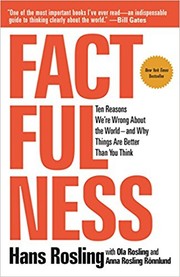 FactfulnessHans Rosling, Ola Rosling · 2018
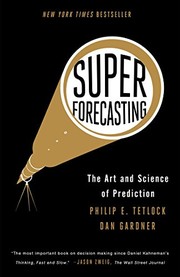 SuperforecastingPhilip E. Tetlock, Dan Gardner · 2015
 Criminal profilingBrent E. Turvey · 1999
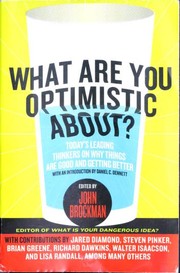 What Are You Optimistic About?John Brockman, Mihaly Csikszentmihalyi · 2007
Ranked by number of editions on Open Library, a rough measure of how lasting a book is.
🔗 Related topics
- Predictive analytics Predictive analytics encompasses a variety of statistical techniques from data mining, predictive modeling, and machine learning that analyze current and…
- Predictive modelling In finance and mathematics, predictive modelling is the use of statistics to predict outcomes. Most often the event one wants to predict is in the future…
- Political forecasting Political forecasting aims at forecasting the outcomes of political events. Political events can be a number of events such as diplomatic decisions, actions…
- Logistic regression In statistics, a logistic model (or logit model) is a statistical model that models the log-odds of an event as a linear combination of one or more independent…
- Demand forecasting Demand forecasting, also known as demand planning and sales forecasting (DP&SF), involves the prediction of the quantity of goods and services that will…
- Probabilistic forecasting Probabilistic forecasting summarizes what is known about, or opinions about, future events. In contrast to single-valued forecasts (such as forecasting…
- Regression analysis In statistical modeling, regression analysis is a statistical method for estimating the relationship between a dependent variable (often called the outcome…
- Forecasting Forecasting is the process of making predictions based on past and present data. These forecasts can later be compared with actual outcomes. For example…