Everything about Pointer (computer programming)
Object which stores memory addresses in a computer program

In computer science, a pointer is an object in many programming languages that stores a memory address. This can be that of another value located in computer memory, or in some cases, that of memory-mapped computer hardware. A pointer references a location in memory, and obtaining the value stored at that location is known as dereferencing the pointer. As an analogy, a page number in a book's index could be considered a pointer to the corresponding page; dereferencing such a pointer would be done by flipping to the page with the given page number and reading the text found on that page. The actual format and content of a pointer variable is dependent on the underlying computer architecture. Wikipedia →
🧭 Start here: a 6-step reading path
- Read the overview: Pointer (computer programming)A 5-minute orientation
- Pick up a classic book: Using Turbo CThe most-reprinted book on the subject
- Read the landmark paper: A genetic programming approach to the evolution of brain–computer interfaces for 2-D mouse–pointer controlCited 2 times
- Go sideways: C data typesA closely related topic
- Go sideways: C syntaxA closely related topic
📖 Definitions
No dictionary entry for this exact phrase.
🏆 Landmark papers (most cited)
📚 Books worth reading
 Using Turbo CHerbert Schildt · 1987
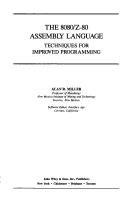 The 8080/Z-80 assembly languageAlan R. Miller · 1981
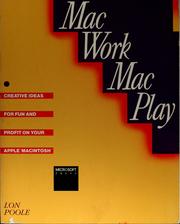 MacWork, MacPlayLon Poole · 1984
 Level II ROMsMark D. Goodwin · 1983
 Compute!'s Commodore collectionCompute! Publications, Inc · 1984
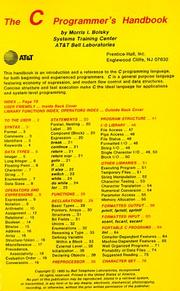 The C programmer's handbookMorris I. Bolsky · 1985
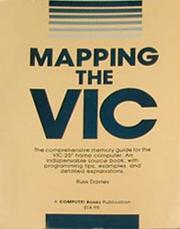 Mapping the VICRuss Davies · 1984
 Advanced programming techniques for the Apple IIGS toolboxMorgan Davis · 1988
Ranked by number of editions on Open Library, a rough measure of how lasting a book is.
🔗 Related topics
- C data types In the C programming language, data types constitute the semantics and characteristics of storage of data elements. They are expressed in the language…
- C syntax C syntax is the form that text must have in order to be C programming language code. The language syntax rules are designed to allow for code that is terse…
- Sizeof sizeof is a unary operator in the C and C++ programming languages that evaluates to the storage size of an expression or a data type, measured in units…
- Const In some programming languages, const is a type qualifier (a keyword applied to a data type) that indicates that the data is read-only. While this can be…
- Reference (C++) In the C++ programming language, a reference is a simple reference datatype that is less powerful but safer than the pointer type inherited from C. The…
- C++ classes A class in C++ is a user-defined type or data structure declared with any of the keywords class, struct or union (the first two are collectively referred…
- Dangling pointer Dangling pointers and wild pointers in computer programming are pointers that do not point to a valid object of the appropriate type. These are special…
- Typedef typedef is a reserved keyword in the programming languages C, C++, and Objective-C. It is used to create an additional name (alias) for another data type…