Live briefing

Everything about Dangling pointer
Pointer that does not point to a valid object
Dangling pointers and wild pointers in computer programming are pointers that do not point to a valid object of the appropriate type. These are special cases of memory safety violations. More generally, dangling references and wild references are references that do not resolve to a valid destination. Wikipedia →
🧭 Start here: a 6-step reading path
- Read the overview: Dangling pointerA 5-minute orientation
- Pick up a classic book: Modern Operating SystemsThe most-reprinted book on the subject
- Read the landmark paper: Efficient detection of dangling pointer error for C/C++ programsCited 0 times
- Go sideways: Pointer (computer programming)A closely related topic
- Go sideways: C dynamic memory allocationA closely related topic
📖 Definitions
Noun A pointer (variable that holds the address of a memory location) that does not reference a valid object.
Noun A pointer referencing memory that was previously deallocated.
🏆 Landmark papers (most cited)
📚 Books worth reading
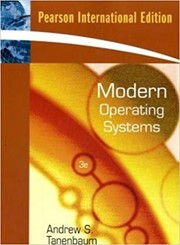 Modern Operating SystemsAndrew S. Tanenbaum, Herbert Bos · 1992
 College writing skills with readingsLangan, John · 2005
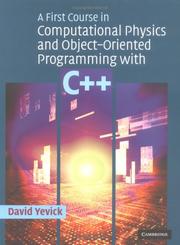 A first course in computational physics and object-oriented programming with C++David Yevick · 2005
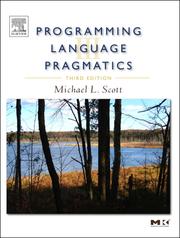 Programming Language PragmaticsMichael Lee Scott · 2009
Ranked by number of editions on Open Library, a rough measure of how lasting a book is.
🔗 Related topics
- Pointer (computer programming) I do consider assignment statements and pointer variables to be among computer science's "most valuable treasures." — Donald Knuth, Structured Programming…
- C dynamic memory allocation C dynamic memory allocation refers to performing manual memory management for dynamic memory allocation in the C programming language via a group of functions…
- Segmentation fault In computing, a segmentation fault (often shortened to segfault) or access violation is a failure condition raised by hardware with memory protection,…
- Cyclone (programming language) The Cyclone programming language was intended to be a safe dialect of the C language. It avoids buffer overflows and other vulnerabilities that are possible…
- Manual memory management In computer science, manual memory management refers to the usage of manual instructions by the programmer to identify and deallocate unused objects, or…
- Destructor (computer programming) In object-oriented programming, a destructor (sometimes abbreviated dtor) is a method which is invoked mechanically just before the memory of the object…
- C syntax C syntax is the form that text must have in order to be C programming language code. The language syntax rules are designed to allow for code that is terse…
- Mtrace mtrace is the memory debugger included in the GNU C Library. mtrace tool works only with single threaded applications. In a multithreaded application a…