Everything about Planet
Large, round non-stellar astronomical object

A planet is a large, rounded astronomical body that is generally required to be in orbit around a star, stellar remnant, or brown dwarf, and is not one itself. The Solar System has eight planets by the most restrictive definition of the term: the terrestrial planets Mercury, Venus, Earth, and Mars, and the giant planets Jupiter, Saturn, Uranus, and Neptune. The best available theory of planet formation is the nebular hypothesis, which posits that an interstellar cloud collapses out of a nebula to create a young protostar orbited by a protoplanetary disk. Planets grow in this disk by the gradual accumulation of material driven by gravity, a process called accretion. Wikipedia →
🧭 Start here: a 6-step reading path
- Read the overview: PlanetA 5-minute orientation
- Skim a recent paper: The 2024 state of the climate report: Perilous times on planet EarthInfluential work since 2022
- Pick up a classic book: The War of the WorldsThe most-reprinted book on the subject
- Read the landmark paper: Planetary boundaries: Guiding human development on a changing planetCited 9,810 times
- Go sideways: Definition of planetA closely related topic
- Go sideways: Solar SystemA closely related topic
📖 Definitions
Noun Each of the seven major bodies which move relative to the fixed stars in the night sky—the Moon, Mercury, Venus, the Sun, Mars, Jupiter and Saturn.
Noun Any body that orbits the Sun, including the asteroids (as minor planets) and sometimes the moons of those bodies (as satellite planets)
Noun A body which is massive enough to be in hydrostatic equilibrium (generally resulting in being an ellipsoid) but not enough to attain nuclear fusion and, in IAU usage, which directly orbits a star (or multiple star) and dominates the region of its orbit; specifically, in the case of the Solar system, the eight major bodies of Mercury, Venus, Earth, Mars, Jupiter, Saturn, Uranus, and Neptune.
Noun construed with the or this: The Earth.
🗂️ The subject at a glance
🏆 Landmark papers (most cited)
Planetary boundaries: Guiding human development on a changing planet
Powering the planet: Chemical challenges in solar energy utilization
Solutions for a cultivated planet
Kepler Planet-Detection Mission: Introduction and First Results
Trophic Downgrading of Planet Earth
Sustainable development goals for people and planet
Planet of Slums
Powering the planet with solar fuel
🆕 Influential since 2022
The 2024 state of the climate report: Perilous times on planet Earth
Interpreting the Atmospheric Composition of Exoplanets: Sensitivity to Planet Formation Assumptions
A just world on a safe planet: a Lancet Planetary Health–Earth Commission report on Earth-system boundaries, translations, and transformations
Early Planet Formation in Embedded Disks (eDisk). I. Overview of the Program and First Results
Post-COVID remote working and its impact on people, productivity, and the planet: an exploratory scoping review
📚 Books worth reading
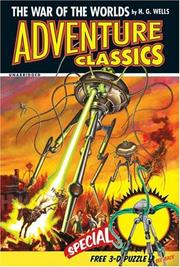 The War of the WorldsH. G. Wells
 FoundationIsaac Asimov · 1951
 SolarisStanisław Lem · 1961
 Second FoundationIsaac Asimov · 1953
 The Foundation TrilogyIsaac Asimov · 1950
 Foundation and EarthIsaac Asimov · 1986
 The Currents of SpaceIsaac Asimov · 1952
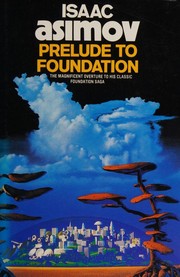 Prelude to FoundationIsaac Asimov · 1988
Ranked by number of editions on Open Library, a rough measure of how lasting a book is.
🔗 Related topics
- Definition of planet The International Astronomical Union's definition of a planet in the Solar System Object is in orbit around the Sun Object has sufficient mass for its…
- Solar System The Solar System is the gravitationally bound system of the Sun and the masses that orbit it, most prominently its eight planets, of which Earth is one…
- Planetary-mass object A planetary-mass object (PMO), planemo, or planetary body (sometimes referred to as a world) is, by geophysical definition of celestial objects, any celestial…
- Natural satellite A natural satellite is, in the most common usage, an astronomical body that orbits a planet, dwarf planet, or small Solar System body (or sometimes another…
- Retrograde and prograde motion Retrograde motion in astronomy is, in general, orbital or rotational motion of an object in the direction opposite the rotation of its primary, that is…
- Geophysical definition of planet The International Union of Geological Sciences (IUGS) is the internationally recognized body charged with fostering agreement on nomenclature and classification…
- Orbital resonance In celestial mechanics, orbital resonance occurs when orbiting bodies exert regular, periodic gravitational influence on each other, usually because their…
- List of planet types The following is a list of planet types by their mass, radius, orbit, physical and chemical composition, or by another classification. Hypothetical astronomical…