Everything about Solar System
Planetary system consisting of the Sun and objects orbiting it

The Solar System is the gravitationally bound system of the Sun and the masses that orbit it, most prominently its eight planets, of which Earth is one. The Solar System is an isolated single-star planetary system within the Milky Way Galaxy. The system formed about 4.6 billion years ago when a dense region of a molecular cloud collapsed, creating the Sun and a protoplanetary disc from which the orbiting bodies assembled. Wikipedia →
🧭 Start here: a 6-step reading path
- Read the overview: Solar SystemA 5-minute orientation
- Skim a recent paper: A review of hybrid renewable energy systems: Solar and wind-powered solutions: Challenges, opportunities, and policy implicationsInfluential work since 2022
- Pick up a classic book: 21st Century AstronomyThe most-reprinted book on the subject
- Read the landmark paper: Solar System IonospheresCited 51 times
- Go sideways: Kuiper beltA closely related topic
- Go sideways: Centaur (small Solar System body)A closely related topic
📖 Definitions
Proper noun Alternative letter-case form of Solar System; the Sun and all the objects in orbit around it.
Noun Any orbital system of at least one fusor and other heavenly bodies, like planets and other objects.
Noun Ellipsis of solar power system (“electric power system that supplies usable solar power by means of photovoltaics”).
🏆 Landmark papers (most cited)
Solar System Ionospheres
The Solar System
Solar system sputtering
Solar System binaries
The solar system
Solar System Chaos
Solar Tracking System
Pocket Solar System
🆕 Influential since 2022
A review of hybrid renewable energy systems: Solar and wind-powered solutions: Challenges, opportunities, and policy implications
Making the Solar System
Wearable solar fluidic system
Solar System Learning Innovation through Augmented Reality: Increasing Student Concept Solar System
Volcanism in the Solar System
📚 Books worth reading
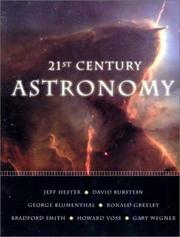 21st Century AstronomyJeffrey S. Hester, David Burstein · 2002
 The Magic School BusJoanna Cole · 1990
 The sunFranklyn M. Branley · 1961
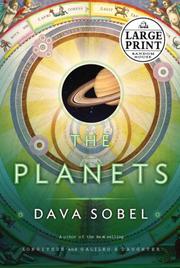 The PlanetsDava Sobel, Rosa Maria Borràs Montané · 2005
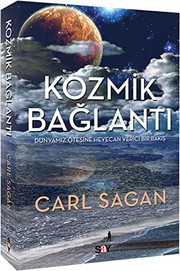 The Cosmic ConnectionCarl Sagan · 1973
 Foundations of astronomyMichael A. Seeds · 1984
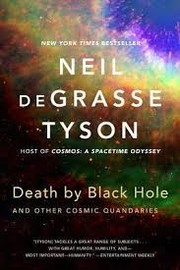 Death by black hole : and other cosmic quandariesNeil deGrasse Tyson · 2007
 The Planets in Our Solar SystemFranklyn M. Branley, O'Malley, Kevin · 1981
Ranked by number of editions on Open Library, a rough measure of how lasting a book is.
🔗 Related topics
- Kuiper belt The Kuiper belt (/ˈkaɪpər/ ) is a circumstellar disc in the outer Solar System that extends from the orbit of Neptune at 30 astronomical units (AU) to…
- Centaur (small Solar System body) In planetary astronomy, a centaur is a small Solar System body that orbits the Sun between Jupiter and Neptune and crosses the orbits of one or more of…
- Scattered disc The scattered disc (or scattered disk) is a distant circumstellar disc in the Solar System that is sparsely populated by icy small Solar System bodies…
- List of hypothetical Solar System objects A hypothetical Solar System object is a planet, natural satellite, subsatellite or similar body in the Solar System whose existence is not known, but has…
- Nice model In astronomy, the Nice (/ˈniːs/) model is a scenario for the dynamical evolution of the Solar System. It is named for the location of the Côte d'Azur Observator…
- Formation and evolution of the Solar System The formation of the Solar System began about 4.6 billion years ago with the gravitational collapse of a small part of a giant molecular cloud. Most of…
- Planets beyond Neptune Following the discovery of the planet Neptune in 1846, there was considerable speculation that another planet might exist beyond its orbit. The search…
- Five-planet Nice model The five-planet Nice model is a numerical model of the early Solar System that is a revised variation of the Nice model. It begins with five giant planets…