Live briefing
Everything about Physical layer
OSI model layer for physical data transmission
In the seven-layer OSI model of computer networking, the physical layer or layer 1 is the first and lowest layer: the layer most closely associated with the physical connection between devices. The physical layer provides an electrical, mechanical, and procedural interface to the transmission medium. The shapes and properties of the electrical connectors, the frequencies to transmit on, the line code to use and similar low-level parameters are specified by the physical layer. Wikipedia →
🧭 Start here: a 6-step reading path
- Read the overview: Physical layerA 5-minute orientation
- Skim a recent paper: Generative AI for Physical Layer Communications: A SurveyInfluential work since 2022
- Pick up a classic book: Grenzschicht-TheorieThe most-reprinted book on the subject
- Read the landmark paper: Transmit beamforming for physical-layer multicastingCited 1,182 times
- Go sideways: Medium access controlA closely related topic
- Go sideways: XAUIA closely related topic
📖 Definitions
No dictionary entry for this exact phrase.
🗂️ The subject at a glance
🏆 Landmark papers (most cited)
Transmit beamforming for physical-layer multicasting
Deep Learning in Physical Layer Communications
Wireless physical layer security
The challenges facing physical layer security
Vehicular Communications: A Physical Layer Perspective
Physical-Layer Authentication
Reliable Physical Layer Network Coding
Physical-Layer Security in 6G Networks
🆕 Influential since 2022
Generative AI for Physical Layer Communications: A Survey
Physical Layer Security in Near-Field Communications
In-Band Full-Duplex: The Physical Layer
Layer-by-layer designer nanoarchitectonics for physical and chemical communications in functional materials
Physical-layer security based mobile edge computing for emerging cyber physical systems
📚 Books worth reading
 Grenzschicht-TheorieHermann Schlichting, Herrmann Schlichting · 1951
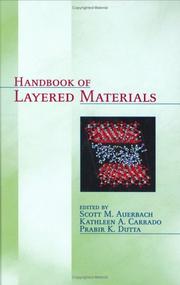 Handbook of layered materialsPrabir K. Dutta · 2004
- 📕Observation of the atmospheric boundary layer in the western and central Gulf of MexicoRadian International LLC. Electronic systems, Sonoma Technology Inc · 1998
 Interfacial phenomena in chromatographyEmile Pefferkorn · 1999
 Quasiparticle Theory of Defects in SolidsD. I. Pushkarov · 1991
- 📕A balloon-borne cloud condensation nuclei counter · 1997
- 📕Heat transfer to a full-coverage, film-cooled surface with compound-angle (30 ̊and 45)̊ hole injectionH. K. Kim · 1979
- 📕Full-coverage film coolingS. Yavuzkurt · 1979
Ranked by number of editions on Open Library, a rough measure of how lasting a book is.
🔗 Related topics
- Medium access control In IEEE 802 LAN/MAN standards, the medium access control (MAC), also called media access control, is the layer that controls the hardware responsible for…
- XAUI 10 Gigabit Attachment Unit Interface (XAUI /ˈzaʊi/ ZOW-ee) is a standard for extending the XGMII (10 Gigabit Media Independent Interface) between the MAC…
- Physical medium dependent Physical medium dependent sublayers or PMDs further help to define the physical layer of computer network protocols. They define the details of transmission…
- IEEE 802 IEEE 802 is a family of Institute of Electrical and Electronics Engineers (IEEE) standards for local area networks (LANs), personal area networks (PANs)…
- Ethernet physical layer The physical-layer specifications of the Ethernet family of computer network standards are published by the Institute of Electrical and Electronics Engineers…
- Data link layer The data link layer, or layer 2, is the second layer of the seven-layer OSI model of computer networking. This layer is the protocol layer that transfers…
- OSI model The Open Systems Interconnection (OSI) model is a reference model published in 1984 by the International Organization for Standardization (ISO) that "provides…
- Logical link control In the IEEE 802 reference model of computer networking, the logical link control (LLC) data communication protocol layer is the upper sublayer of the data…