Live briefing
Everything about Data link layer
OSI model layer for node-to-node data transfer
The data link layer, or layer 2, is the second layer of the seven-layer OSI model of computer networking. This layer is the protocol layer that transfers data between nodes on a network segment across the physical layer. The data link layer provides the functional and procedural means to transfer data between network entities and may also provide the means to detect and possibly correct errors that can occur in the physical layer. Wikipedia →
🧭 Start here: a 6-step reading path
- Read the overview: Data link layerA 5-minute orientation
- Skim a recent paper: An Innovative IoT Framework using Machine Learning for Predicting Information Loss at the Data Link Layer in Smart NetworksInfluential work since 2022
- Pick up a classic book: Software EngineeringThe most-reprinted book on the subject
- Read the landmark paper: On link layer denial of service in data wireless LANsCited 56 times
- Go sideways: Logical link controlA closely related topic
- Go sideways: Medium access controlA closely related topic
📖 Definitions
No dictionary entry for this exact phrase.
🗂️ The subject at a glance
🏆 Landmark papers (most cited)
On link layer denial of service in data wireless LANs
Cross-layer modeling of wireless channels for data-link and IP layer performance evaluation
Survey on Traffic Management in Data Center Network: From Link Layer to Application Layer
Intermittent Connection Fault Diagnosis for CAN Using Data Link Layer Information
Evaluating the field bus data link layer by a Petri net-based simulation
Transient Error Correction Coding Scheme for Reliable Low Power Data Link Layer in NoC
Joint Physical Layer and Data Link Layer Optimization of CDMA-Based Networks
Quantum communication protocol for data link layer based on entanglement
🆕 Influential since 2022
An Innovative IoT Framework using Machine Learning for Predicting Information Loss at the Data Link Layer in Smart Networks
Wireless Sensor Security Issues on Data Link Layer: A Survey
Multi-sector discrete-time channel model for data link layer evaluation of CubeSat communications
Design and analysis of data link impersonation attack for wired LAN application layer services
A High-Logic-Density, Low-Power Control Character Detection and Identification Circuit for the JESD204B Data Link Layer
📚 Books worth reading
 Software EngineeringRoger S. Pressman, Bruce Maxim · 1982
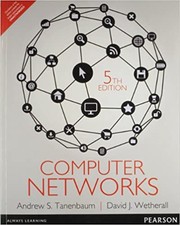 Computer NetworksAndrew S. Tanenbaum, John David Wetherall · 1981
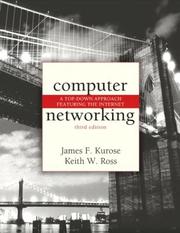 Computer networkingJames F. Kurose, Keith W. Ross · 1900
 Invitation to Computer ScienceG. Michael Schneider, Judith L. Gersting · 1995
 Communications, Signal Processing, and SystemsQilian Liang · 2012
 Data Communications and NetworkingBehrouz A. Forouzan, Catherine Ann Coombs · 2000
 Statistical Atlases and Computational Models of the Heart. Imaging and Modelling ChallengesOscar Camara · 2012
 HackingJon Erickson, Jon Erickson · 2003
Ranked by number of editions on Open Library, a rough measure of how lasting a book is.
🔗 Related topics
- Logical link control In the IEEE 802 reference model of computer networking, the logical link control (LLC) data communication protocol layer is the upper sublayer of the data…
- Medium access control In IEEE 802 LAN/MAN standards, the medium access control (MAC), also called media access control, is the layer that controls the hardware responsible for…
- IEEE 802.2 IEEE 802.2 is the original name of the ISO/IEC 8802-2 standard which defines logical link control (LLC) as the upper portion of the data link layer of…
- Ethernet frame In computer networking, an Ethernet frame is a data link layer protocol data unit and uses the underlying Ethernet physical layer transport mechanisms…
- Frame check sequence A frame check sequence (FCS) is an error-detecting code added to a frame in a communication protocol. Frames are used to send payload data from a source…
- Network packet In telecommunications and computer networking, a network packet is a formatted unit of data carried by a packet-switched network. A packet consists of…
- Link layer In computer networking, the link layer is the lowest layer in the Internet protocol suite, the networking architecture of the Internet. The link layer…
- Carrier-sense multiple access with collision detection Carrier-sense multiple access with collision detection (CSMA/CD) is a medium access control (MAC) method used most notably in early Ethernet technology…