Everything about Perception
Interpretation of sensory information

Perception is the identification, interpretation and organization of sensory information, in order to represent and understand the presented information or environment. All perception involves signals that go through the nervous system, which in turn result from physical or chemical stimulation of the sensory system. Vision involves light striking the retina of the eye; smell is mediated by odor molecules; and hearing involves pressure waves. Wikipedia →
🧭 Start here: a 6-step reading path
- Read the overview: PerceptionA 5-minute orientation
- Skim a recent paper: Perception and sensing for autonomous vehicles under adverse weather conditions: A surveyInfluential work since 2022
- Pick up a classic book: MenschenkenntnisThe most-reprinted book on the subject
- Read the landmark paper: Perception of RiskCited 7,315 times
- Go sideways: IllusionA closely related topic
- Go sideways: SenseA closely related topic
📖 Definitions
Noun The organisation, identification and interpretation of sensory information.
Noun Conscious understanding of something.
Noun Vision (ability) (Can we verify this sense?)
Noun Acuity
🏆 Landmark papers (most cited)
Perception of Risk
The Fusiform Face Area: A Module in Human Extrastriate Cortex Specialized for Face Perception
Automatic atom type and bond type perception in molecular mechanical calculations
Separate visual pathways for perception and action
The distributed human neural system for face perception
Past, Present, and Future of Simultaneous Localization and Mapping: Toward the Robust-Perception Age
An interactive activation model of context effects in letter perception: I. An account of basic findings.
Visual perception of biological motion and a model for its analysis
🆕 Influential since 2022
Perception and sensing for autonomous vehicles under adverse weather conditions: A survey
Bioinspired in-sensor visual adaptation for accurate perception
Augmented tactile-perception and haptic-feedback rings as human-machine interfaces aiming for immersive interactions
YOLOP: You Only Look Once for Panoptic Driving Perception
Optoelectronic graded neurons for bioinspired in-sensor motion perception
📚 Books worth reading
 MenschenkenntnisAlfred Adler, Colin Brett · 1927
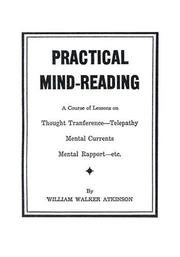 Practical Mind ReadingWilliam Walker Atkinson · 1908
 An Abundance of KatherinesJohn Green · 2006
 Understood BetsyDorothy Canfield Fisher · 1917
 MonsterWalter Dean Myers · 1999
 Interaction of ColourJoseph Albers · 1963
 Uno, nessuno e centomilaLuigi Pirandello · 1926
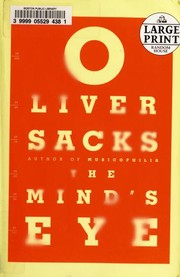 The Mind's EyeOliver Sacks · 2010
Ranked by number of editions on Open Library, a rough measure of how lasting a book is.
🔗 Related topics
- Illusion An illusion is a distortion of the senses, which can reveal how the mind normally organizes and interprets sensory stimulation. Although illusions distort…
- Sense A sense is a biological system used by an organism for sensation, the process of gathering information about the surroundings through the detection of…
- Multisensory integration Multisensory integration, also known as multimodal integration, is the study of how information from the different sensory modalities (such as sight, hearing…
- Sensory cue In perceptual psychology, a sensory cue is a statistic or signal that can be extracted from the sensory input by a perceiver, that indicates the state…
- Stimulus modality Stimulus modality, also called sensory modality, is one aspect of a stimulus or what is perceived after a stimulus. For example, the temperature modality…
- Sensory processing Sensory processing is the process that organizes and distinguishes sensation (sensory information) from one's own body and the environment, thus making…
- Associative visual agnosia Associative visual agnosia is a form of visual agnosia. It is an impairment in recognition or assigning meaning to a stimulus that is accurately perceived…
- Visual capture In psychology, visual capture is the dominance of vision over other sense modalities in creating a percept. In this process, the visual senses influence…