Live briefing
Everything about Stimulus modality
What is perceived after a physiological stimulus
Stimulus modality, also called sensory modality, is one aspect of a stimulus or what is perceived after a stimulus. For example, the temperature modality is registered after heat or cold stimulate a receptor. Some sensory modalities include: light, sound, temperature, taste, pressure, and smell. The type and location of the sensory receptor activated by the stimulus plays the primary role in coding the sensation. All sensory modalities work together to heighten stimuli sensation when necessary. Wikipedia →
🧭 Start here: a 6-step reading path
- Read the overview: Stimulus modalityA 5-minute orientation
- Skim a recent paper: Hippocampal subfield associations with memory depend on stimulus modality and retrieval modeInfluential work since 2022
- Pick up a classic book: Word and objectThe most-reprinted book on the subject
- Read the landmark paper: Stimulus modality, perceptual overlap, and the go/no‐go N2Cited 158 times
- Go sideways: Adequate stimulusA closely related topic
- Go sideways: SenseA closely related topic
📖 Definitions
No dictionary entry for this exact phrase.
🏆 Landmark papers (most cited)
Stimulus modality, perceptual overlap, and the go/no‐go N2
P3a, perceptual distinctiveness, and stimulus modality
P300 topography and modality effects from a single‐stimulus paradigm
P300, stimulus intensity, modality, and probability
P300 from a single-stimulus paradigm: passive versus active tasks and stimulus modality
Stimulus modality and verbal learning performance in normal aging
Functional fixedness in creative thinking tasks depends on stimulus modality.
P300, stimulus intensity, and modality
🆕 Influential since 2022
Hippocampal subfield associations with memory depend on stimulus modality and retrieval mode
Sensory modality defines the relation between EEG Lempel–Ziv diversity and meaningfulness of a stimulus
Modality predictability modulation confirms the sensorial readiness function of the pre-stimulus activity in sensory brain areas
Effects of sensory modality and task relevance on omitted stimulus potentials
Modality and fidelity: Understanding how creative stimulus combinations impact design outcomes and process across different conceptual design phases
📚 Books worth reading
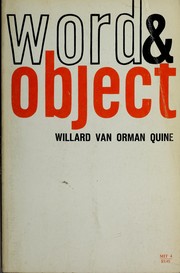 Word and objectWillard Van Orman Quine · 1960
- 📕The effects of individual learning style and stimulus modality on memory performance in older adultsSusan E Baker · 1999
- 📕Effects of stimulus modality on the development of equivalence relations in children with mild disabilitiesLori Jean Marks · 1993
- 📕Imagery ability in relation to the level of fear and number of stimulus modalities presentedArnold D. Holzman · 1981
- 📕The recency effect as a function of the modality of stimulus presentation and interpolated distractor tasks in the initial Delayed Free-recall and adapted Brown-Peterson/Free-recall paradigmsEmmet Dunne
 Handbook of motor skills · 2009
 Introduction to making very big booksUnited States. Congress. Senate. Committee on Pensions · 2011
Ranked by number of editions on Open Library, a rough measure of how lasting a book is.
🔗 Related topics
- Adequate stimulus The adequate stimulus is a property of a sensory receptor that determines the type of energy[citation needed] to which a sensory receptor responds with…
- Sense A sense is a biological system used by an organism for sensation, the process of gathering information about the surroundings through the detection of…
- Sensory neuron Sensory neurons, also known as afferent neurons, are in the nervous system which convert a specific type of stimulus, via their receptors, into action…
- Sensory nervous system The sensory nervous system is a part of the nervous system responsible for processing sensory information. A sensory system consists of sensory neurons…
- Stimulus (physiology) Look up stimulus in Wiktionary, the free dictionary. In physiology, a stimulus is a change within an organism's internal or external environment. This…
- Sensory loss Many types of sense loss occur due to a dysfunctional sensation process, whether it be ineffective receptors, nerve damage, or cerebral impairment. Unlike…
- Topographic map (neuroanatomy) In neuroanatomy, a topographic map is the ordered projection of a sensory surface (like the retina or the skin) or an effector system (like the musculature)…
- Special senses In medicine and anatomy, the special senses are the senses that have specialized organs devoted to them: vision (the eye) hearing and balance (the ear…