Live briefing
Everything about Packet Layer Protocol
Network layer protocol in X.25
Packet Layer Protocol or PLP operates on the network layer of the OSI model for the X.25 protocol suite. It is responsible for addressing, routing, and delivering data packets across different networks. PLP manages the packet exchanges between DTE devices across VCs. PLP also can be used on ISDN using Link Access Procedures, D channel (LAPD). Wikipedia →
🧭 Start here: a 6-step reading path
- Read the overview: Packet Layer ProtocolA 5-minute orientation
- Pick up a classic book: Computer NetworksThe most-reprinted book on the subject
- Read the landmark paper: A Novel Cross-layer Routing Protocol for Increasing Packet Transfer Reliability in Mobile Sensor NetworksCited 22 times
- Go sideways: X.25A closely related topic
- Go sideways: Virtual circuitA closely related topic
📖 Definitions
No dictionary entry for this exact phrase.
🗂️ The subject at a glance
No outline available.
🏆 Landmark papers (most cited)
A Novel Cross-layer Routing Protocol for Increasing Packet Transfer Reliability in Mobile Sensor Networks
A new adaptive MAC layer protocol for broadband packet wireless networks in harsh fading and interference environments
AX.25 [data link layer protocol for packet radio networks]
Data delivery delay and cross-layer packet size analysis for reliable transmission of Licklider transmission protocol in space networks
Design and analysis of an MAC-layer protocol for a car-to-infrastructure packet radio network
Cross-layer based routing protocol and solution to packet reordering for TCP in MANET
Protocol-Agnostic and Packet-Based Intrusion Detection Using a Multi-Layer Deep-Learning Architecture at the Network Edge
New adaptive link layer protocol using optimal packet length for free space optical communications
📚 Books worth reading
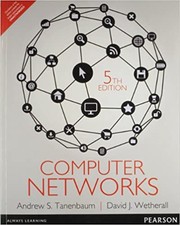 Computer NetworksAndrew S. Tanenbaum, John David Wetherall · 1981
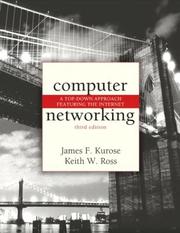 Computer networkingJames F. Kurose, Keith W. Ross · 1900
 Data Communications and NetworkingBehrouz A. Forouzan, Catherine Ann Coombs · 2000
 WCDMA for UMTSHarri Holma, Antti Toskala · 2000
 Hands-on networking with Internet technologiesDouglas E. Comer, Douglas E Comer · 2002
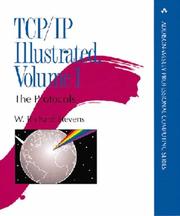 TCP/IP IllustratedW. Richard Stevens, Kevin R. Fall · 1993
- 📕LTE for public safetyRainer Liebhart · 2015
 The basics of information securityJason Andress · 2011
Ranked by number of editions on Open Library, a rough measure of how lasting a book is.
🔗 Related topics
- X.25 X.25 is an ITU-T standard protocol suite for packet-switched data communication in wide area networks (WAN). It was originally defined by the International…
- Virtual circuit A virtual circuit (VC) is a means of transporting data over a data network, based on packet switching and in which a connection is first established across…
- LAPB Link Access Procedure, Balanced (LAPB) implements the data link layer as defined in the X.25 protocol suite. LAPB is a bit-oriented protocol derived from…
- X.121 X.121 is the ITU-T address format of the X.25 protocol suite used as part of call setup to establish a switched virtual circuit between public data networks…
- Frame Relay Frame Relay (FR) is a standardized wide area network (WAN) technology that specifies the physical and data link layers of digital telecommunications channels…
- Connection-oriented communication In telecommunications and computer networking, connection-oriented communication is a communication protocol where a communication session or a semi-permanent…
- ATM Adaptation Layer 5 ATM Adaptation Layer 5 (AAL5) is an ATM adaptation layer used to send variable-length packets up to 65,535 octets in size across an Asynchronous Transfer…
- RS-232 In telecommunications, RS-232 or Recommended Standard 232 is a standard introduced in 1960 for serial communication transmission of data. It formally defines…