Everything about PL/C
Programming language developed at Cornell University

PL/C is an instructional dialect of the programming language PL/I, developed at the Department of Computer Science of Cornell University in the early 1970s in an effort headed by Professor Richard W. Conway and graduate student Thomas R. Wilcox. PL/C was developed with the specific goal of being used for teaching programming. The PL/C compiler, which implemented almost all of the large PL/I language, had the unusual capability of never failing to compile a program, through the use of extensive automatic correction of many syntax errors and by converting any remaining syntax errors to output statements. This was important because, at the time, students submitted their programs on IBM punch cards and might not get their output back for several hours. Over 250 other universities adopted PL/C; as one late-1970s textbook on PL/I noted, "PL/C ... the compiler for PL/I developed at Cornell University ... is widely used in teaching programming." Similarly, a mid-late-1970s survey of programming languages said that "PL/C is a widely used dialect of PL/I." Wikipedia →
🧭 Start here: a 6-step reading path
- Read the overview: PL/CA 5-minute orientation
- Pick up a classic book: Convenience store womanThe most-reprinted book on the subject
- Read the landmark paper: Primer on structured programming: Using PL/I, PL/C, and PL/CTCited 0 times
- Go sideways: David GriesA closely related topic
- Go sideways: Richard W. ConwayA closely related topic
📖 Definitions
No dictionary entry for this exact phrase.
🏆 Landmark papers (most cited)
📚 Books worth reading
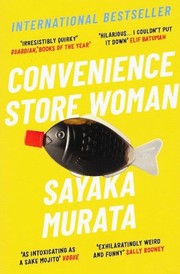 Convenience store woman村田沙耶香, Nancy Wu · 2018
 Caitaani mũtharaba-inĩNgũgĩ wa Thiongʼo · 1980
 ChakaThomas Mofolo · 1931
 The Routledge advanced Chinese multimedia courseCarolyn Lee, Hsin-Hsin Liang · 2009
 An introduction to programmingRichard Walter Conway · 1973
 Structured PL/I (PL/C) programmingJean-Paul Tremblay, Jean P. Tremblay · 1979
- 📕P. L./C. EssentialsLawrence J. Mazlack · 1977
 Structured programmingKathi Davis, Lyle Domina · 1987
Ranked by number of editions on Open Library, a rough measure of how lasting a book is.
🔗 Related topics
- David Gries David Gries (born April 26, 1939) is an American computer scientist at Cornell University, mainly known for his books The Science of Programming (1981)…
- Richard W. Conway Richard Walter Conway (December 12, 1931 – March 19, 2024) was an American industrial engineer and computer scientist who was the Emerson Electric Company…
- WATFIV WATFOR and WATFIV (variously, Waterloo FORTRAN or Waterloo FORTRAN IV), developed in Canada at the University of Waterloo, are implementations of the Fortran…
- ASSIST (computing) ASSIST (the Assembler System for Student Instruction and Systems Teaching) is an IBM System/370-compatible assembler and interpreter developed in the early…
- Cornell University Programming Language Cornell University Programming Language (also called CUPL) is a procedural computer programming language developed at Cornell University in the late 1960s…
- History of compiler construction In computing, a compiler is a computer program that transforms source code written in a programming language or computer language (the source language)…
- CORC CORC (the Cornell computing language) was a simple computer language developed at Cornell University in 1962 to serve lay users, namely for students to…
- PL/I PL/I (Programming Language One, pronounced /piː ɛl wʌn/ and sometimes written PL/1) is a procedural, imperative computer programming language initially…