Live briefing
Everything about CORC
Programming language
CORC was a simple computer language developed at Cornell University in 1962 to serve lay users, namely for students to use to solve math problems. Its developers, industrial engineering professors Richard W. Conway and William L. Maxwell, sought to create a language which could both expose mathematics and engineering students to computing and remove the burden of mechanical problem-solving from their professors. Wikipedia →
🧭 Start here: a 6-step reading path
- Read the overview: CORCA 5-minute orientation
- Skim a recent paper: Enhanced critical axial tensile strain limit of CORC ® wires: FEM and analytical modelingInfluential work since 2022
- Pick up a classic book: CORCThe most-reprinted book on the subject
- Read the landmark paper: Status of CORC ® cables and wires for use in high-field magnets and power systems a decade after their introductionCited 257 times
- Go sideways: Cornell University Programming LanguageA closely related topic
- Go sideways: Richard W. ConwayA closely related topic
📖 Definitions
No dictionary entry for this exact phrase.
🗂️ The subject at a glance
No outline available.
🏆 Landmark papers (most cited)
Status of CORC ® cables and wires for use in high-field magnets and power systems a decade after their introduction
Introduction of CORC ® wires: highly flexible, round high-temperature superconducting wires for magnet and power transmission applications
Study of the magnetization loss of CORC ® cables using a 3D T-A formulation
A viable dipole magnet concept with REBCO CORC ® wires and further development needs for high-field magnet applications
Bending of CORC ® cables and wires: finite element parametric study and experimental validation
Quench behavior of high-temperature superconductor (RE)Ba 2 Cu 3 O x CORC cable
Magnetization ac loss reduction in HTS CORC ® cables made of striated coated conductors
Design and Manufacturing of a 45 kA at 10 T REBCO-CORC Cable-in-Conduit Conductor for Large-Scale Magnets
🆕 Influential since 2022
Enhanced critical axial tensile strain limit of CORC ® wires: FEM and analytical modeling
Prediction of strain, inter-layer interaction and critical current in CORC ® wires under axial strain by T-A modeling
Investigating the effect of transverse compressive loads on the electromagnetic performance of superconducting CORC ® cables
Numerical simulations of electromagnetic behavior in CORC cable based on a modified H − ϕ formulation
Investigations in the tape-to-tape contact resistance and contact composition in superconducting CORC® wires
📚 Books worth reading
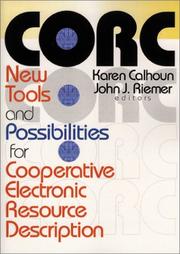 CORCKaren Calhoun, John J. Riemer · 2001
Ranked by number of editions on Open Library, a rough measure of how lasting a book is.
🔗 Related topics
- Cornell University Programming Language Cornell University Programming Language (also called CUPL) is a procedural computer programming language developed at Cornell University in the late 1960s…
- Richard W. Conway Richard Walter Conway (December 12, 1931 – March 19, 2024) was an American industrial engineer and computer scientist who was the Emerson Electric Company…
- PL/C PL/C is an instructional dialect of the programming language PL/I, developed at the Department of Computer Science of Cornell University in the early 1970s…
- WATFIV WATFOR and WATFIV (variously, Waterloo FORTRAN or Waterloo FORTRAN IV), developed in Canada at the University of Waterloo, are implementations of the Fortran…
- David Gries David Gries (born April 26, 1939) is an American computer scientist at Cornell University, mainly known for his books The Science of Programming (1981)…
- History of compiler construction In computing, a compiler is a computer program that transforms source code written in a programming language or computer language (the source language)…
- Outline of computer science Computer science (also called computing science) is the study of the theoretical foundations of information and computation and their implementation and…
- Dartmouth Time-Sharing System The Dartmouth Time-Sharing System (DTSS) is a discontinued operating system first developed at Dartmouth College between 1963 and 1964. It was the first…