Everything about Opponent process
Theory regarding color vision in humans
The opponent process is a hypothesis of color vision that states that the human visual system interprets information about color by processing signals from the three types of photoreceptor cells in an antagonistic manner. The three types of cones are called L, M, and S. The names stand for "Long wavelength sensitive,” "middle wavelength sensitive," and "short wavelength sensitive." The opponent-process theory implicates three opponent channels: L versus M, S versus (L+M), and a luminance channel. These cone-opponent mechanisms were at one time thought to be the neural substrate for a psychological theory called Hering's Opponent Colors Theory, which calls for three psychologically important opponent color processes: red versus green, blue versus yellow, and black versus white (luminance). The Opponent Colors Theory is named for the German physiologist Ewald Hering who proposed the idea in the late 19th century. However, it has been argued that Hering’s Opponent Colors Theory lacks adequate phenomenological and empirical support, and may not be a necessary feature of normal human color experience. Correspondingly, considerable physiological and behavioral evidence proves that the physiological cone opponent mechanisms do not constitute the neurobiological basis for Hering's Opponent Colors Theory. Wikipedia →
🧭 Start here: a 6-step reading path
- Read the overview: Opponent processA 5-minute orientation
- Skim a recent paper: How short-form video features influence addiction behavior? Empirical research from the opponent process theory perspectiveInfluential work since 2022
- Pick up a classic book: Roughing ItThe most-reprinted book on the subject
- Read the landmark paper: An opponent-process theory of motivation: I. Temporal dynamics of affect.Cited 1,294 times
- Go sideways: Unique huesA closely related topic
- Go sideways: AfterimageA closely related topic
📖 Definitions
No dictionary entry for this exact phrase.
🗂️ The subject at a glance
🏆 Landmark papers (most cited)
An opponent-process theory of motivation: I. Temporal dynamics of affect.
An opponent-process theory of color vision.
Neurobiology of Opioid Addiction: Opponent Process, Hyperkatifeia, and Negative Reinforcement
Opponent process theory of motivation: Neurobiological evidence from studies of opiate dependence
An opponent-process theory of motivation: II. Cigarette addiction.
Opponent-process additivity-I: Red/green equilibria
Opponent Process Model and Psychostimulant Addiction
Opponent process properties of self-administered cocaine
🆕 Influential since 2022
How short-form video features influence addiction behavior? Empirical research from the opponent process theory perspective
Retinomorphic Color Perception Based on Opponent Process Enabled by Perovskite Bipolar Photodetectors
Opponent processing in the retinal mosaic of nymphalid butterflies
Bidirectional valence coding in amygdala intercalated clusters: A neural substrate for the opponent-process theory of motivation
Rewarding Effects of the Hallucinogen 4-AcO-DMT Administration and Withdrawal in Rats: A Challenge to the Opponent-Process Theory
📚 Books worth reading
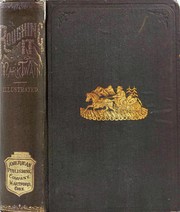 Roughing ItMark Twain · 1872
 The influence of Greek ideas and usages upon the Christian churchEdwin Hatch · 1890
 PsychologyMichael Maher · 1890
 The Conspirators HierarchyJohn Coleman · 1992
 The boy-savers' guideQuin, George Edward · 1908
- 📕Computer-automated opponent for manned air-to-air combat situationsWalter W. Hankins · 1979
 Echo chamberKathleen Hall Jamieson, Joseph Capella · 2008
 Colour perceptionRainer Mausfeld, Dieter Heyer · 2003
Ranked by number of editions on Open Library, a rough measure of how lasting a book is.
🔗 Related topics
- Unique hues Unique hue is a term used in perceptual psychology of color vision and generally applied to the purest hues of blue, green, yellow and red. The proponents…
- Afterimage An afterimage, or after-image, is an image that continues to appear in the eyes after a period of exposure to the original image. An afterimage may be…
- Color vision Color vision (CV), a feature of visual perception, is an ability to perceive differences between light composed of different frequencies independently…
- Impossible color Impossible colors are colors that do not appear in ordinary visual functioning. Different color theories suggest different hypothetical colors that humans…
- Color Color (or colour in Commonwealth English) is the visual perception produced by the activation of the different types of cone cells in the eye caused by…
- Opponent-process theory Opponent-process theory is a psychological and neurological model that accounts for a wide range of behaviors, including color vision. This model was first…
- Russell L. De Valois Russell L. De Valois (December 15, 1926 – September 20, 2003) was an American scientist recognized for his pioneering research on spatial and color vision…
- Color constancy Color constancy is a feature of the human color perception system which ensures that the perceived color of objects remains relatively constant under varying…