Everything about Color
Perception caused by wavelengths of light

Color is the visual perception produced by the activation of the different types of cone cells in the eye caused by light. Though color is not an inherent property of matter, color perception is related to an object's light absorption, emission, reflection and transmission. For most humans, visible wavelengths of light are the ones perceived in the visible light spectrum, with three types of cone cells (trichromacy). Other animals may have a different number of cone cell types or have eyes sensitive to different wavelengths, such as bees that can distinguish ultraviolet, and thus have a different color sensitivity range. Animal perception of color originates from different light wavelength or spectral sensitivity in cone cell types, which is then processed by the brain. Wikipedia →
🧭 Start here: a 6-step reading path
- Read the overview: ColorA 5-minute orientation
- Skim a recent paper: Underwater Image Enhancement via Minimal Color Loss and Locally Adaptive Contrast EnhancementInfluential work since 2022
- Pick up a classic book: Brown Bear, Brown Bear, What Do You See?The most-reprinted book on the subject
- Read the landmark paper: Mapping the Margins: Intersectionality, Identity Politics, and Violence against Women of ColorCited 20,672 times
- Go sideways: GamutA closely related topic
- Go sideways: Color visionA closely related topic
📖 Definitions
Noun The spectral composition of visible light.
Noun A subset thereof: A particular set of visible spectral compositions, perceived or named as a class.
Noun A particular set of visible spectral compositions, perceived or named as a class.
Noun Hue as opposed to achromatic colors (black, white and grays).
🗂️ The subject at a glance
🏆 Landmark papers (most cited)
Mapping the Margins: Intersectionality, Identity Politics, and Violence against Women of Color
Nanocrystals of Cesium Lead Halide Perovskites (CsPbX 3 , X = Cl, Br, and I): Novel Optoelectronic Materials Showing Bright Emission with Wide Color Gamut
Color indexing
Ridge-Based Vessel Segmentation in Color Images of the Retina
Lepton number as the fourth "color"
Color test for detection of free terminal amino groups in the solid-phase synthesis of peptides
A multiscale retinex for bridging the gap between color images and the human observation of scenes
Color transfer between images
🆕 Influential since 2022
Underwater Image Enhancement via Minimal Color Loss and Locally Adaptive Contrast Enhancement
Completely aqueous processable stimulus responsive organic room temperature phosphorescence materials with tunable afterglow color
Review of computer-generated hologram algorithms for color dynamic holographic three-dimensional display
Photo-triggered full-color circularly polarized luminescence based on photonic capsules for multilevel information encryption
Stimulus-responsive room temperature phosphorescence materials with full-color tunability from pure organic amorphous polymers
📚 Books worth reading
 Brown Bear, Brown Bear, What Do You See?Bill Martin Jr., Eric Carle · 1967
 Baby EinsteinJulie Aigner-Clark, Nadeem Zaidi · 2001
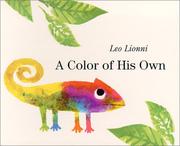 A Colour of his ownLeo Lionni · 1975
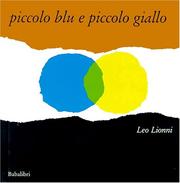 Little blue and little yellowLeo Lionni · 1959
 Ruby the Red FairyDaisy Meadows · 2003
 El Monstre De ColorsAnna Llenas · 2012
 Interaction of ColourJoseph Albers · 1963
 The Day the Crayons QuitDrew Daywalt · 2013
Ranked by number of editions on Open Library, a rough measure of how lasting a book is.
🔗 Related topics
- Gamut In color reproduction and colorimetry, a gamut, or color gamut /ˈɡæmət/, is a convex set containing the colors that can be accurately represented, i.e…
- Color vision Color vision (CV), a feature of visual perception, is an ability to perceive differences between light composed of different frequencies independently…
- Color solid A color solid is the three-dimensional representation of a color space or model and can be thought as an analog of, for example, the one-dimensional color…
- Impossible color Impossible colors are colors that do not appear in ordinary visual functioning. Different color theories suggest different hypothetical colors that humans…
- Tetrachromacy Tetrachromacy (from Ancient Greek tetra, meaning "four" and chroma, meaning "color") is the condition of possessing four independent channels for conveying…
- Spectral color A spectral color is a color that is evoked by monochromatic light, i.e. either a spectral line with a single wavelength or frequency of light in the visible…
- Opponent process The opponent process is a hypothesis of color vision that states that the human visual system interprets information about color by processing signals…
- Young–Helmholtz theory The Young–Helmholtz theory (based on the work of Thomas Young and Hermann von Helmholtz in the 19th century), also known as the trichromatic theory, is…