Live briefing
Everything about Operator (computer programming)
Basic programming language construct
In computer programming, an operator is a programming language construct that provides functionality that may not be possible to define as a user-defined function or has syntax different from that of a function. Like other programming language concepts, operator has a generally accepted, although debatable, meaning among practitioners. Wikipedia →
🧭 Start here: a 6-step reading path
- Read the overview: Operator (computer programming)A 5-minute orientation
- Skim a recent paper: Transformasi Digital Masyarakat: Pemberdayaan Melalui Program Computer Operator AssistantInfluential work since 2022
- Pick up a classic book: Interactive Computing SeriesThe most-reprinted book on the subject
- Go sideways: Common operator notationA closely related topic
- Go sideways: Operators in C and C++A closely related topic
📖 Definitions
No dictionary entry for this exact phrase.
🏆 Landmark papers (most cited)
- No matching papers found.
🆕 Influential since 2022
📚 Books worth reading
 Interactive Computing SeriesKenneth C. Laudon · 1997
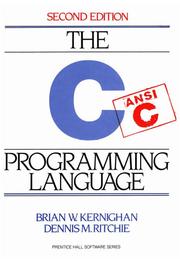 The C Programming LanguageBrian W. Kernighan, Dennis MacAlistair Ritchie · 1978
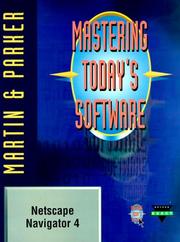 Mastering today's softwareEdward G. Martin, Charles S. Parker · 1992
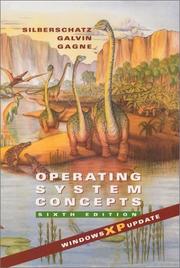 Operating System ConceptsAbraham Silberschatz · 1988
 The little disturbances of manGrace Paley · 1959
 IEEE standard for information technologyInstitute of Electrical and Electronics Engineers · 1991
 Operating systemsWilliam Stallings · 1992
 DOSKris A. Jamsa · 1987
Ranked by number of editions on Open Library, a rough measure of how lasting a book is.
🔗 Related topics
- Common operator notation In programming languages, scientific calculators and similar common operator notation or operator grammar is a way to define and analyse mathematical and…
- Operators in C and C++ This is a list of operators in the C and C++ programming languages. All listed operators are in C++ and lacking indication otherwise, in C as well. Some…
- Arity In logic, mathematics, and computer science, arity (/ˈærɪti/ ) is the number of arguments or operands taken by a function, operation or relation. In mathematics…
- Polish notation Polish notation (PN), also known as normal Polish notation (NPN), Łukasiewicz notation, Warsaw notation, Polish prefix notation, Eastern Notation, or simply…
- Prolog syntax and semantics The syntax and semantics of Prolog, a programming language, are the sets of rules that define how a Prolog program is written and how it is interpreted…
- Increment and decrement operators Increment and decrement operators are unary operators that increase or decrease their operand by one. They are commonly found in imperative programming…
- Unary operation In mathematics, a unary operation is an operation with only one operand, i.e. a single input. This is in contrast to binary operations, which use two operands…
- Ternary operation In mathematics, a ternary operation is an n-ary operation with n = 3. A ternary operation on a set A takes any given three elements of A and combines them…