Everything about Polish notation
Mathematics notation with operators preceding operands

Polish notation (PN), also known as normal Polish notation (NPN), Łukasiewicz notation, Warsaw notation, Polish prefix notation, Eastern Notation, or simply prefix notation, is a mathematical notation in which operators precede their operands, in contrast to the more common infix notation, in which operators are placed between operands, as well as reverse Polish notation (RPN), in which operators follow their operands. It does not need any parentheses as long as each operator has a fixed number of operands. The description "Polish" refers to the nationality of logician Jan Łukasiewicz, who invented Polish notation in 1924. Wikipedia →
🧭 Start here: a 6-step reading path
- Read the overview: Polish notationA 5-minute orientation
- Skim a recent paper: Extensions of Languages in Polish NotationInfluential work since 2022
- Pick up a classic book: Le psautier du bréviaire romainThe most-reprinted book on the subject
- Read the landmark paper: Translation to and from Polish NotationCited 39 times
- Go sideways: Reverse Polish notationA closely related topic
- Go sideways: Infix notationA closely related topic
📖 Definitions
No dictionary entry for this exact phrase.
🗂️ The subject at a glance
🏆 Landmark papers (most cited)
Translation to and from Polish Notation
Human behaviour and performance in calculator use with Algebraic and Reverse Polish Notation
Reverse polish notation method
On the ambiguation of Polish notation
Polish Notation
A Polish-Type Notation for Chemical Structures.
Employing Reverse Polish Notation in Encryption
Connection between Petri nets and Polish notation
🆕 Influential since 2022
📚 Books worth reading
 Le psautier du bréviaire romainCatholic Church · 1200
 Discrete mathematicsKenneth A. Ross · 1985
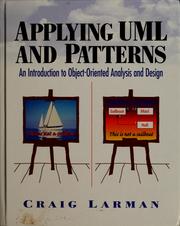 Applying UML and patternsCraig Larman · 1998
 An introduction to computer scienceJean-Paul Tremblay, Richard B. Bunt · 1979
 An introduction to data structures with applicationsJean-Paul Tremblay, Paul Gordon Sorenson · 1976
 Data structures and algorithms in JavaAdam Drozdek · 2001
 AQA A-Level Computer ScienceBob Reeves · 2015
 EnterJ. Daniel Dodin · 1984
Ranked by number of editions on Open Library, a rough measure of how lasting a book is.
🔗 Related topics
- Reverse Polish notation Reverse Polish notation (RPN), also known as reverse Łukasiewicz notation, Polish postfix notation or simply postfix notation, is a mathematical notation…
- Infix notation Infix notation is the notation commonly used in arithmetical and logical formulae and statements. It is characterized by the placement of operators between…
- Calculator input methods There are various ways in which calculators interpret keystrokes. These can be categorized into two main types: On a single-step or immediate-execution…
- Common operator notation In programming languages, scientific calculators and similar common operator notation or operator grammar is a way to define and analyse mathematical and…
- Shunting yard algorithm In computer science, the shunting yard algorithm is a method for parsing arithmetical or logical expressions, or a combination of both, specified in infix…
- Operator (computer programming) In computer programming, an operator is a programming language construct that provides functionality that may not be possible to define as a user-defined…
- Operand In mathematics, an operand is the object of a mathematical operation, i.e., it is the object or quantity that is operated on. Unknown operands in equalities…
- Logical conjunction In logic, mathematics and linguistics, and (∧) is the truth-functional operator of conjunction or logical conjunction. The logical connective of this operator…