Everything about Open-source software
Software licensed to ensure source code usage rights

Open-source software (OSS) is computer software released under a license allowing users to use, study, modify, and distribute it to anyone for any purpose – in contrast to proprietary (closed-source) software. These abilities are typically granted through open licenses or, more rarely, by dedication to the public domain. The development of open-source software can be based on open collaboration, a decentralized model of production. Open-source software is commonly defined according to The Open Source Definition of the Open Source Initiative, but the precise meaning of "open source" remains contentious. Wikipedia →
🧭 Start here: a 6-step reading path
- Read the overview: Open-source softwareA 5-minute orientation
- Skim a recent paper: SPM 25: open source neuroimaging analysis softwareInfluential work since 2022
- Pick up a classic book: Introduction to AlgorithmsThe most-reprinted book on the subject
- Read the landmark paper: QUANTUM ESPRESSO: a modular and open-source software project for quantum simulations of materialsCited 23,933 times
- Go sideways: Alternative terms for free softwareA closely related topic
- Go sideways: Free and open-source softwareA closely related topic
📖 Definitions
No dictionary entry for this exact phrase.
🏆 Landmark papers (most cited)
QUANTUM ESPRESSO: a modular and open-source software project for quantum simulations of materials
Introducing mothur: Open-Source, Platform-Independent, Community-Supported Software for Describing and Comparing Microbial Communities
FieldTrip: Open Source Software for Advanced Analysis of MEG, EEG, and Invasive Electrophysiological Data
QuPath: Open source software for digital pathology image analysis
Gephi: An Open Source Software for Exploring and Manipulating Networks
GSAS-II : the genesis of a modern open-source all purpose crystallography software package
🆕 Influential since 2022
📚 Books worth reading
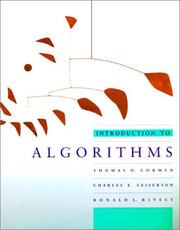 Introduction to AlgorithmsThomas H. Cormen, Charles E. Leiserson · 1990
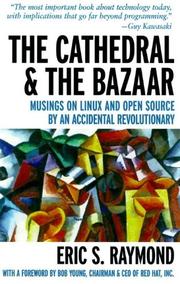 The Cathedral and the BazaarEric S. Raymond · 1999
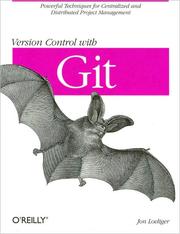 Version control with GitJon Loeliger · 2009
 Debugging with GDBRichard Stallman, Cygnus Solutions · 1988
 Arduino for DummiesJohn Nussey · 2013
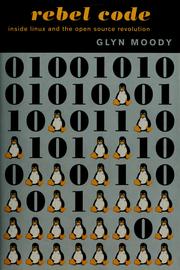 Rebel codeGlyn Moody · 2001
 Producing Open Source SoftwareKarl Fogel · 2005
 Open Sources 2.0Chris DiBona, Mark Stone · 2005
Ranked by number of editions on Open Library, a rough measure of how lasting a book is.
🔗 Related topics
- Alternative terms for free software Alternative terms for free software, such as OSS, FOSS, and FLOSS, have been a recurring issue among free and open-source software users from the late…
- Free and open-source software Free and open-source software (FOSS) is software available under a license that gives users the right to use, share, modify, and distribute the software…
- Free software Free software or libre software, sometimes known as freedom-respecting software, is computer software distributed under free software licenses that allow…
- History of free and open-source software The history of free and open-source software begins at the advent of computer software in the early half of the 20th century. In the 1950s and 1960s, computer…
- GNU Project The GNU Project (/ɡnuː/ GNOO) is a free software, mass collaboration project announced by Richard Stallman on September 27, 1983. Its goal is to provide…
- Fork (software development) In software development, a fork is a codebase that is created by copying an existing codebase and modifying it independently from the original. Software…
- GNU GNU (/ɡnuː/ GNOO) is an extensive collection of free software (387 packages as of June 2025[update]), which can be used as an operating system or can be…
- The Open Source Definition The Open Source Definition (OSD) is a policy document published by the Open Source Initiative in 1998. Derived from the Debian Free Software Guidelines…