Live briefing

Everything about One-way compression function
Cryptographic primitive
In cryptography, a one-way compression function is a function that transforms two fixed-length inputs into a fixed-length output. The transformation is "one-way", meaning that it is difficult given a particular output to compute inputs which compress to that output. One-way compression functions are not related to conventional data compression algorithms, which instead can be inverted exactly or approximately to the original data. Wikipedia →
🧭 Start here: a 6-step reading path
- Read the overview: One-way compression functionA 5-minute orientation
- Pick up a classic book: Computer networkingThe most-reprinted book on the subject
- Read the landmark paper: A smart contract based on enhanced residual gated recurrent unit with the one-way compression function for attack detection in IoTCited 0 times
- Go sideways: Block cipherA closely related topic
- Go sideways: Block cipher mode of operationA closely related topic
📖 Definitions
No dictionary entry for this exact phrase.
🏆 Landmark papers (most cited)
📚 Books worth reading
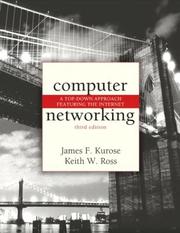 Computer networkingJames F. Kurose, Keith W. Ross · 1900
 Technical CommunicationJohn M. Lannon · 2000
 Absolute beginner's guide to computer basicsMichael Miller · 2003
 Home recording for musicians for dummiesJeff Strong · 2005
 Computational Thinking for the Modern Problem SolverKenny A. Hunt, David D. Riley · 2014
 The UNIX operating systemChristian, Kaare, Kaare Christian · 1983
 Fundamentals of data structures in CEllis Horowitz · 1993
 Data structures, algorithms, and applications in C++Sartaj Sahni · 1998
Ranked by number of editions on Open Library, a rough measure of how lasting a book is.
🔗 Related topics
- Block cipher In cryptography, a block cipher is a deterministic algorithm that operates on fixed-length groups of bits, called blocks. Block ciphers are the elementary…
- Block cipher mode of operation In cryptography, a block cipher mode of operation is an algorithm that uses a block cipher to provide information security such as confidentiality or authentici…
- Substitution–permutation network In cryptography, an SP-network, or substitution–permutation network (SPN), is a series of linked mathematical operations used in block cipher algorithms…
- Merkle–Damgård construction In cryptography, the Merkle–Damgård construction or Merkle–Damgård hash function is a method of building collision-resistant cryptographic hash functions…
- Streebog Streebog (Russian: Стрибог) is a cryptographic hash function defined in the Russian national standard GOST R 34.11-2012 Information Technology – Cryptographic…
- Initialization vector In cryptography, an initialization vector (IV) or starting variable is an input to a cryptographic primitive being used to provide the initial state. The…
- Cryptographic hash function A cryptographic hash function (CHF) is a hash algorithm (a map of an arbitrary binary string to a binary string with a fixed size of n bits) that has special…
- CBC-MAC In cryptography, a cipher block chaining message authentication code (CBC-MAC) is a technique for constructing a message authentication code (MAC) from…