Live briefing
Everything about Block cipher
Type of cipher
In cryptography, a block cipher is a deterministic algorithm that operates on fixed-length groups of bits, called blocks. Block ciphers are the elementary building blocks of many cryptographic protocols. They are ubiquitous in the storage and exchange of data, where such data is secured and authenticated via encryption. Wikipedia →
🧭 Start here: a 6-step reading path
- Read the overview: Block cipherA 5-minute orientation
- Skim a recent paper: HDLBC: A lightweight block cipher with high diffusionInfluential work since 2022
- Pick up a classic book: Information technologyThe most-reprinted book on the subject
- Read the landmark paper: Chaotic encryption algorithm based on alternant of stream cipher and block cipherCited 82 times
- Go sideways: Data Encryption StandardA closely related topic
- Go sideways: Block cipher mode of operationA closely related topic
📖 Definitions
Noun Any deterministic cipher that operates on fixed-size groups of bits (binary digits), called blocks, with an unvarying transformation specified by a symmetric key.
🏆 Landmark papers (most cited)
Chaotic encryption algorithm based on alternant of stream cipher and block cipher
An introduction to Block Cipher Cryptanalysis
SFN: A new lightweight block cipher
CHOSEN-KEY ATTACKS ON A BLOCK CIPHER
Cryptanalysis of reduced QTL block cipher
Hash function based on block cipher
Cryptanalytic Attacks on IDEA Block Cipher
An Efficient Quasigroup Block Cipher
🆕 Influential since 2022
📚 Books worth reading
- 📕Information technologyInternational Organization for Standardization. · 1990
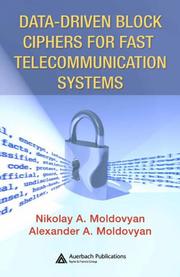 Data-driven block ciphers for fast telecommunication systemsNick Moldovyan, Nikolai Moldovyan · 2007
 CryptographyDouglas R. Stinson · 1995
- 📕Security of Block CiphersKazuo Sakiyama, Yu Sasaki · 2015
 Cryptography and network securityWilliam Stallings · 2006
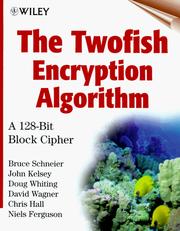 The Twofish Encryption AlgorithmBruce Schneier · 1999
- 📕On the design and security of block ciphersXuejia Lai · 1992
- 📕Hardware Oriented Authenticated Encryption Based on Tweakable Block CiphersMustafa Khairallah · 2021
Ranked by number of editions on Open Library, a rough measure of how lasting a book is.
🔗 Related topics
- Data Encryption Standard The Data Encryption Standard (DES /ˌdiːˌiːˈɛs, dɛz/) is a symmetric-key algorithm for the encryption of digital data. Although its short key length of…
- Block cipher mode of operation In cryptography, a block cipher mode of operation is an algorithm that uses a block cipher to provide information security such as confidentiality or authentici…
- Ciphertext In cryptography, ciphertext or cyphertext is the result of encryption performed on plaintext using an algorithm, called a cipher. Ciphertext is also known…
- Galois/Counter Mode In cryptography, Galois/Counter Mode (GCM) is a mode of operation for symmetric-key cryptographic block ciphers. The proposal was first published in 2007…
- Initialization vector In cryptography, an initialization vector (IV) or starting variable is an input to a cryptographic primitive being used to provide the initial state. The…
- Lai–Massey scheme The Lai–Massey scheme is a cryptographic structure used in the design of block ciphers, an alternative to the Feistel network for converting a non-invertible…
- Madryga In cryptography, Madryga is a block cipher published in 1984 by W. E. Madryga. It was designed to be easy and efficient for implementation in software…
- Feistel cipher In cryptography, a Feistel cipher (also known as Luby–Rackoff block cipher) is a symmetric structure used in the construction of block ciphers, named after…