Live briefing
Everything about Observational study
Study with uncontrolled variable of interest
An observational study is a type of research design in which outcomes are measured to identify patterns or associations without attempts by the investigator to manipulate variables or conditions. Wikipedia →
🧭 Start here: a 6-step reading path
- Read the overview: Observational studyA 5-minute orientation
- Skim a recent paper: Clinical features and management of human monkeypox: a retrospective observational study in the UKInfluential work since 2022
- Pick up a classic book: How to observeThe most-reprinted book on the subject
- Read the landmark paper: Observational Study of Behavior: Sampling MethodsCited 10,390 times
- Go sideways: Scientific controlA closely related topic
- Go sideways: Randomized controlled trialA closely related topic
📖 Definitions
No dictionary entry for this exact phrase.
🗂️ The subject at a glance
🏆 Landmark papers (most cited)
Observational Study of Behavior: Sampling Methods
Clinical course and outcomes of critically ill patients with SARS-CoV-2 pneumonia in Wuhan, China: a single-centered, retrospective, observational study
Association of glycaemia with macrovascular and microvascular complications of type 2 diabetes (UKPDS 35): prospective observational study
AN OBSERVATIONAL STUDY OF SHOPLIFTING
An observational study of anger.
Diagnosing fever by touch: observational study
AN OBSERVATIONAL STUDY OF CUMULUS
Observational Study Designs
🆕 Influential since 2022
Clinical features and management of human monkeypox: a retrospective observational study in the UK
Symptom prevalence, duration, and risk of hospital admission in individuals infected with SARS-CoV-2 during periods of omicron and delta variant dominance: a prospective observational study from the ZOE COVID Study
Persistence of somatic symptoms after COVID-19 in the Netherlands: an observational cohort study
ScotCap – A large observational cohort study
Burnout among resident doctors: An observational study
📚 Books worth reading
 How to observeHarriet Martineau · 1838
 Astronomy TodayEric Chaisson, S. McMillan · 2001
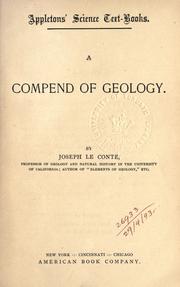 A compend of geologyJoseph Le Conte · 1884
 Blackways of KentHylan Lewis · 1955
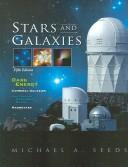 Stars and galaxiesMichael A. Seeds · 1999
 Infant ObservationFrances Thomson-Salo · 2014
 Anthropic BiasNick Bostrom · 2002
- 📕Slow LookingShari Tishman · 2017
Ranked by number of editions on Open Library, a rough measure of how lasting a book is.
🔗 Related topics
- Scientific control A scientific control is an element of an experiment or observation designed to minimize the influence of variables other than the independent variable…
- Randomized controlled trial A randomized controlled trial (RCT) is a type of statistical experiment designed to evaluate the efficacy or safety of an intervention by minimizing bias…
- Confounding In causal inference, confounding is a form of systematic error (or bias) that can distort estimates of causal effects in observational studies. A confounder…
- Cohort study A cohort study is a particular form of longitudinal study that samples a cohort (a group of people who share a defining characteristic, typically those…
- Randomized experiment In science, randomized experiments are the experiments that allow the greatest reliability and validity of statistical estimates of treatment effects.…
- Experiment An experiment is a procedure carried out to support or refute a hypothesis, or determine the efficacy or likelihood of something previously untried. Experiments…
- Blinded experiment In a blind or blinded experiment, information that could influence participants or investigators is withheld until the experiment is completed. Blinding…
- Mendelian randomization In epidemiology, Mendelian randomization (commonly abbreviated to MR) is a method using measured variation in genes to examine the causal effect of an…