Everything about Confounding
Bias in causal inference

In causal inference, confounding is a form of systematic error that can distort estimates of causal effects in observational studies. A confounder is traditionally understood to be a variable that (1) independently predicts the outcome, (2) is associated with the exposure, and (3) is not on the causal pathway between the exposure and the outcome. Failure to control for a confounder results in a spurious association between exposure and outcome. Wikipedia →
🧭 Start here: a 6-step reading path
- Read the overview: ConfoundingA 5-minute orientation
- Skim a recent paper: Dissection of artifactual and confounding glial signatures by single-cell sequencing of mouse and human brainInfluential work since 2022
- Pick up a classic book: Fermat's Last TheoremThe most-reprinted book on the subject
- Read the landmark paper: An Introduction to Propensity Score Methods for Reducing the Effects of Confounding in Observational StudiesCited 11,279 times
- Go sideways: Scientific controlA closely related topic
- Go sideways: Propensity score matchingA closely related topic
📖 Definitions
Verb present participle and gerund of confound
Noun The act by which things are confounded, or confused.
Noun The process by which an apparent association between an exposure and an outcome is actually explained by another factor.
Adjective Confusing, bewildering, baffling or perplexing.
🗂️ The subject at a glance
🏆 Landmark papers (most cited)
An Introduction to Propensity Score Methods for Reducing the Effects of Confounding in Observational Studies
LD Score regression distinguishes confounding from polygenicity in genome-wide association studies
Equivalence of the Mediation, Confounding and Suppression Effect
Confounding factors in the detection of species responses to habitat fragmentation
Causal Knowledge as a Prerequisite for Confounding Evaluation: An Application to Birth Defects Epidemiology
Confounding and collinearity in regression analysis: a cautionary tale and an alternative procedure, illustrated by studies of British voting behaviour
Impact of a Confounding Variable on a Regression Coefficient
Using the E-Value to Assess the Potential Effect of Unmeasured Confounding in Observational Studies
🆕 Influential since 2022
Dissection of artifactual and confounding glial signatures by single-cell sequencing of mouse and human brain
Confounding factors of Alzheimer's disease plasma biomarkers and their impact on clinical performance
Core concepts in pharmacoepidemiology: Confounding by indication and the role of active comparators
Effects of Confounding Bias in Coronavirus Disease 2019 (COVID-19) and Influenza Vaccine Effectiveness Test-Negative Designs Due to Correlated Influenza and COVID-19 Vaccination Behaviors
Beyond fibrinolysis: The confounding role of Lp(a) in thrombosis
📚 Books worth reading
 Fermat's Last TheoremSimon Singh · 1997
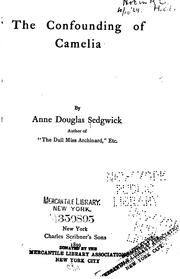 The confounding of CameliaAnne Douglas Sedgwick · 1899
 Murder confoundedRoderic Jeffries · 1993
- 📕Confounding of CameliaAnne Sedgwick · 2014
- 📕Confounding of CameliaAnne Douglas Sedgwick · 2015
 Millerism ConfoundedIchabod Cook · 2018
 Confounding PowersWilliam J. Brenner · 2015
 KnucklerTim Wakefield · 2011
Ranked by number of editions on Open Library, a rough measure of how lasting a book is.
🔗 Related topics
- Scientific control A scientific control is an element of an experiment or observation designed to minimize the influence of variables other than the independent variable…
- Propensity score matching In the statistical analysis of observational data, propensity score matching (PSM) is a statistical matching technique that attempts to estimate the effect…
- Causal model In metaphysics and statistics, a causal model (also called a structural causal model) is a conceptual model that represents the causal mechanisms of a…
- Causal inference Causal inference is the process of determining the independent, actual effect of a particular phenomenon that is a component of a larger system. The main…
- Observational study An observational study is a type of research design in which outcomes are measured to identify patterns or associations without attempts by the investigator…
- Quasi-experiment A quasi-experiment is a research design used to estimate the causal impact of an intervention. This research design is aimed at assessing the difference…
- Ignorability In statistics, ignorability is a feature of an experiment design whereby the method of data collection (and the nature of missing data) does not depend…
- Controlling for a variable In causal models, controlling for a variable means binning data according to measured values of the variable. This is typically done so that the variable…