Live briefing
Everything about OAuth
Method of user authentication in computing
OAuth is an open standard for access delegation, commonly used as a way for Internet users to grant websites or applications access to their information on other websites but without giving them the passwords; simplifying secure access. This mechanism is used by companies such as Amazon, Google, Meta Platforms, Microsoft, and X to permit users to share information about their accounts with third-party applications or websites. Wikipedia →
🧭 Start here: a 6-step reading path
- Read the overview: OAuthA 5-minute orientation
- Skim a recent paper: Best Practices for Integrating OAuth in Mobile Applications for Secure AuthenticationInfluential work since 2022
- Pick up a classic book: Getting Started With Oauth 20The most-reprinted book on the subject
- Read the landmark paper: IoT-OAS: An OAuth-Based Authorization Service Architecture for Secure Services in IoT ScenariosCited 201 times
- Go sideways: Web API securityA closely related topic
- Go sideways: Token BindingA closely related topic
📖 Definitions
No dictionary entry for this exact phrase.
🗂️ The subject at a glance
🏆 Landmark papers (most cited)
IoT-OAS: An OAuth-Based Authorization Service Architecture for Secure Services in IoT Scenarios
OAuth Web Authorization Protocol
Enhancing identity and access management using Hyperledger Fabric and OAuth 2.0: A block-chain-based approach for security and scalability for healthcare industry
Security evaluation of the OAuth 2.0 framework
An Interoperable Access Control Framework for Diverse IoT Platforms Based on OAuth and Role
An Identity Framework for Providing Access to FIWARE OAuth 2.0-Based Services According to the eIDAS European Regulation
Machine learning approach to vulnerability detection in OAuth 2.0 authentication and authorization flow
A privacy-enhanced OAuth 2.0 based protocol for Smart City mobile applications
🆕 Influential since 2022
Best Practices for Integrating OAuth in Mobile Applications for Secure Authentication
Everybody's Looking for SSOmething: A large-scale evaluation on the privacy of OAuth authentication on the web
Practical attacks on Login CSRF in OAuth
Innovations in Multi-Factor Authentication: Exploring OAuth for Enhanced Security
Enhancing 802.1X authentication with identity providers using EAP-OAUTH and OAuth 2.0
📚 Books worth reading
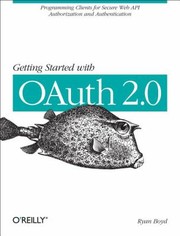 Getting Started With Oauth 20Ryan Boyd · 2012
 The Road To Microservice ArchitectureRaymond Pairan
Ranked by number of editions on Open Library, a rough measure of how lasting a book is.
🔗 Related topics
- Web API security Web API security entails authenticating programs or users who are invoking a web API. Along with the ease of API integrations come the difficulties of…
- Token Binding Token Binding is a proposed standard for a Transport Layer Security (TLS) extension that aims to increase TLS security by using cryptographic certificates…
- User-Managed Access User-Managed Access (UMA) is an OAuth-based access management protocol standard for party-to-party authorization. Version 1.0 of the standard was approved…
- Authorization Authorization or authorisation (see spelling differences), in information security, computer security and IAM (Identity and Access Management), is the…
- Simple Authentication and Security Layer Simple Authentication and Security Layer (SASL) is a framework for authentication and data security in Internet protocols. It decouples authentication…
- OpenID OpenID is an open standard and decentralized authentication protocol promoted by the non-profit OpenID Foundation. It allows users to be authenticated…
- Generic Security Services Application Programming Interface The Generic Security Service Application Programming Interface (GSSAPI, also GSS-API) is an application programming interface for programs to access security…
- SMTP Authentication SMTP Authentication, often abbreviated SMTP AUTH, is an extension of the Simple Mail Transfer Protocol (SMTP) whereby a client may log in using any authenticati…