Everything about Null (SQL)
Marker used in SQL databases to indicate a value does not exist

In the SQL database query language, null or NULL is a special marker used to indicate that a data value does not exist in the database. Introduced by the creator of the relational database model, E. F. Codd, SQL null serves to fulfill the requirement that all true relational database management systems (RDBMS) support a representation of "missing information and inapplicable information". Codd also introduced the use of the lowercase Greek omega (ω) symbol to represent null in database theory. In SQL, NULL is a reserved word used to identify this marker. Wikipedia →
🧭 Start here: a 6-step reading path
- Read the overview: Null (SQL)A 5-minute orientation
- Pick up a classic book: Database system conceptsThe most-reprinted book on the subject
- Read the landmark paper: Null values in SQLCited 11 times
- Go sideways: SQL syntaxA closely related topic
- Go sideways: SQLA closely related topic
📖 Definitions
No dictionary entry for this exact phrase.
🗂️ The subject at a glance
- History
- Null propagation
- Comparisons with NULL and the three-valued logic (3VL)
- Analysis of SQL Null missing-value semantics
- Check constraints and foreign keys
- Outer joins
- Aggregate functions
- When two nulls are equal: grouping, sorting, and some set operations
- Effect on index operation
- Null-handling functions
- Data typing of Null and Unknown
- BOOLEAN data type
🏆 Landmark papers (most cited)
📚 Books worth reading
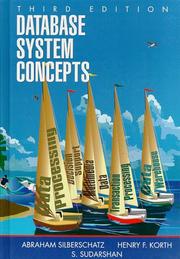 Database system conceptsAbraham Silberschatz · 1997
 Access database design & programmingSteven Roman · 1997
 Incomplete data and data dependencies in relational databasesSergio Greco · 2012
 Joe Celko's SQL for smartiesJoe Celko · 2011
 SQL in easy stepsMike McGrath · 2005
 Database SystemsRamez Elmasri, Shamkant B. Navathe · 2010
 LaTeX for Administrative WorkNicola L. C. Talbot · 2015
 Expert PHP and MySQLAndrew Curioso · 2010
Ranked by number of editions on Open Library, a rough measure of how lasting a book is.
🔗 Related topics
- SQL syntax The syntax of the SQL programming language is defined and maintained by ISO/IEC SC 32 as part of ISO/IEC 9075. This standard is not freely available. Despite…
- SQL Structured Query Language (SQL) (pronounced /ˌɛsˌkjuˈɛl/ S-Q-L; or alternatively as /ˈsiːkwəl/ "sequel") is a domain-specific language used to manage data…
- Select (SQL) The SQL SELECT statement returns a result set of rows, from one or more tables. A SELECT statement retrieves zero or more rows from one or more database…
- Relational model The relational model (RM) is an approach to managing data using a structure and language consistent with first-order predicate logic, first described in…
- Boolean data type In computer science, the Boolean is a data type that has one of two possible values representing the two truth values of logic: true and false. It is named…
- Join (SQL) A join clause in the Structured Query Language (SQL) combines columns from one or more tables into a new table. The operation corresponds to a join operation…
- Check constraint A check constraint is a type of integrity constraint in SQL which specifies a requirement that must be met by each row in a database table. The constraint…
- Relational database A relational database (RDB) is a database based on the relational model of data, as proposed by E. F. Codd in 1970. A Relational Database Management System…