Live briefing

Everything about Boolean data type
Data having only values "true" or "false"
In computer science, the Boolean is a data type that has one of two possible values representing the two truth values of logic: true and false. It is named after George Boole, who first defined an algebraic system of logic in the mid-19th century. The Boolean data type is primarily associated with conditional statements, which allow different actions by changing control flow depending on whether a programmer-specified Boolean condition evaluates to true or false. It is a special case of a more general logical data type—logic does not always need to be Boolean. Wikipedia →
🧭 Start here: a 6-step reading path
- Read the overview: Boolean data typeA 5-minute orientation
- Pick up a classic book: Java software solutionsThe most-reprinted book on the subject
- Read the landmark paper: Boolean implication analysis of single-cell data predicts retinal cell type markersCited 5 times
- Go sideways: Short-circuit evaluationA closely related topic
- Go sideways: Relational operatorA closely related topic
📖 Definitions
No dictionary entry for this exact phrase.
🗂️ The subject at a glance
🏆 Landmark papers (most cited)
📚 Books worth reading
 Java software solutionsLewis, John, John E. Lewis Ph. D. · 1997
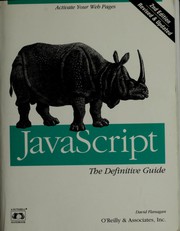 JavaScriptDavid Flanagan · 1996
 Invitation to Computer ScienceG. Michael Schneider, Judith L. Gersting · 1995
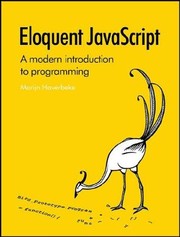 Eloquent JavascriptMarijn Haverbeke · 2009
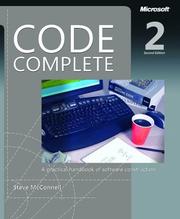 Code CompleteSteve McConnell · 1993
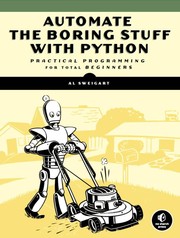 Automate the Boring Stuff with PythonAl Sweigart · 2015
 An introduction to computer scienceJean-Paul Tremblay, Richard B. Bunt · 1979
 Introduction to Computing Using PythonLjubomir Perkovic · 2011
Ranked by number of editions on Open Library, a rough measure of how lasting a book is.
🔗 Related topics
- Short-circuit evaluation Short-circuit evaluation, minimal evaluation, or McCarthy evaluation (after John McCarthy) is the semantics of some Boolean operators in some programming…
- Relational operator In computer science, a relational operator is a programming language construct or operator that defines syntactically a relationship between two entities…
- Primitive data type In computer science, primitive data types are sets of basic data types from which all other data types are constructed. Specifically it often refers to…
- Null (SQL) In the SQL database query language, null or NULL is a special marker used to indicate that a data value does not exist in the database. Introduced by the…
- Conditional (computer programming) In computer programming, a conditional statement directs program control flow based on the value of a condition; a Boolean expression. A conditional expression…
- Comparison of Pascal and C The computer programming languages C and Pascal have similar times of origin, influences, and purposes. Both were used to design (and compile) their own…
- SQL syntax The syntax of the SQL programming language is defined and maintained by ISO/IEC SC 32 as part of ISO/IEC 9075. This standard is not freely available. Despite…
- Ternary conditional operator In computer programming, the ternary conditional operator is a conditional expression with three parts: the Boolean condition, the then-expression, and…