Live briefing

Everything about Computer network
Network that allows computers to share resources and communicate with each other
In computer science, computer engineering, and telecommunications, a network is a group of communicating computers and peripherals called hosts, which communicate data to other hosts via communication protocols, as facilitated by networking hardware. Wikipedia →
🧭 Start here: a 6-step reading path
- Read the overview: Computer networkA 5-minute orientation
- Skim a recent paper: A review of convolutional neural networks in computer visionInfluential work since 2022
- Pick up a classic book: The Internet for DummiesThe most-reprinted book on the subject
- Read the landmark paper: 3D Slicer as an image computing platform for the Quantitative Imaging NetworkCited 8,856 times
- Go sideways: EthernetA closely related topic
- Go sideways: Network topologyA closely related topic
📖 Definitions
No dictionary entry for this exact phrase.
🗂️ The subject at a glance
🏆 Landmark papers (most cited)
3D Slicer as an image computing platform for the Quantitative Imaging Network
Deep Convolutional Neural Networks for Computer-Aided Detection: CNN Architectures, Dataset Characteristics and Transfer Learning
EEGNet: a compact convolutional neural network for EEG-based brain–computer interfaces
Computer-Aided Network Tuning
Optical Computer Switching Network
Network properties of the ARPA computer network
Computer Network Architectures
Computer network threat modelling
🆕 Influential since 2022
📚 Books worth reading
 The Internet for DummiesJohn R. Levine, Carol Baroudi · 1993
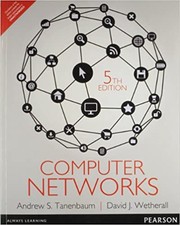 Computer NetworksAndrew S. Tanenbaum, John David Wetherall · 1981
 Hacking for DummiesKevin Beaver, Jutta Schmidt · 2004
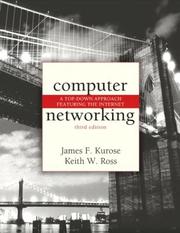 Computer networkingJames F. Kurose, Keith W. Ross · 1900
 C How to ProgramPaul J. Deitel, Harvey M. Deitel · 2007
 Technology in actionAlan Evans, Alan Evans · 2004
 IEEE standard for information technologyInstitute of Electrical and Electronics Engineers · 1991
 Advanced Computing and Systems for SecurityRituparna Chaki, Agostino Cortesi · 2015
Ranked by number of editions on Open Library, a rough measure of how lasting a book is.
🔗 Related topics
- Ethernet Ethernet (/ˈiːθərnɛt/ EE-thər-net) is a family of wired computer networking standards designed for (but not limited to) local area networks (LAN), access…
- Network topology Network topology is the arrangement of the elements (links, nodes, etc.) of a communication network. Network topology can be used to define or describe…
- Multicast In computer networking, multicast is a type of group communication where data transmission is addressed to a group of destination computers simultaneously…
- Data link layer The data link layer, or layer 2, is the second layer of the seven-layer OSI model of computer networking. This layer is the protocol layer that transfers…
- Wide area network A wide area network (WAN) is a telecommunications network that extends over a large geographic area. Wide area networks are often established with leased…
- Local area network A local area network (LAN) is a computer network that interconnects computers within a limited area such as a residence, campus, or building, and has its…
- VLAN A virtual local area network (VLAN) is a local area network broadcast domain that is partitioned and isolated in a virtual network at the data link layer…
- Data center bridging Data center bridging (DCB) is a set of enhancements to the Ethernet local area network communication protocol for use in data center environments, in particular…