Everything about Multitier programming
Programming paradigm
Multitier programming is a programming paradigm for distributed software, which typically follows a multitier architecture, physically separating different functional aspects of the software into different tiers. Multitier programming allows functionalities that span multiple of such tiers to be developed in a single compilation unit using a single programming language. Without multitier programming, tiers are developed using different languages, e.g., JavaScript for the Web client, PHP for the Web server and SQL for the database. Multitier programming is often integrated into general-purpose languages by extending them with support for distribution. Wikipedia →
🧭 Start here: a 6-step reading path
- Read the overview: Multitier programmingA 5-minute orientation
- Pick up a classic book: Practical Handbook of Multi-Tiered Systems of SupportThe most-reprinted book on the subject
- Read the landmark paper: A Survey of Multitier ProgrammingCited 28 times
- Go sideways: Choreographic programmingA closely related topic
- Go sideways: Client–server modelA closely related topic
📖 Definitions
No dictionary entry for this exact phrase.
🗂️ The subject at a glance
🏆 Landmark papers (most cited)
📚 Books worth reading
 Practical Handbook of Multi-Tiered Systems of SupportRachel Brown-Chidsey, Rebekah Bickford · 2015
 Enterprise JavaBeans by exampleHenri Jubin, Jurgen Friedrichs · 1999
 End-User DevelopmentYvonne Dittrich · 2013
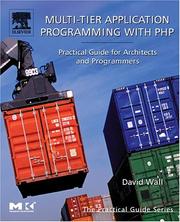 Multi-Tier Application Programming with PHPDavid Wall · 2004
 A new model of school disciplineDavid R. Dupper · 2010
- 📕Multi-Tier Application Programming with PHPDavid Wall · 2004
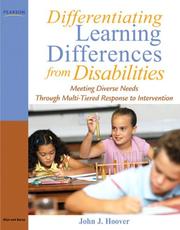 Determing Difference Versus DisabilityJohn Hoover · 2008
 WCF multi-tier services development with LINQMing T. Liu · 2008
Ranked by number of editions on Open Library, a rough measure of how lasting a book is.
🔗 Related topics
- Choreographic programming In computer science, choreographic programming is a programming paradigm for distributed systems, where programs are written as compositions of interactions…
- Client–server model The client–server model is a form of messaging pattern in a distributed application structure that partitions tasks or workloads between the providers…
- State machine replication In computer science, state machine replication (SMR) or state machine approach is a general method for implementing a fault-tolerant service by replicating…
- Eventual consistency Eventual consistency is a consistency model used in distributed computing to achieve high availability. An eventually consistent system ensures that if…
- Brooks–Iyengar algorithm The Brooks–Iyengar algorithm or FuseCPA Algorithm or Brooks–Iyengar hybrid algorithm is a distributed algorithm that improves both the precision and accuracy…
- DBLP DBLP is a computer science bibliography website. Starting in 1993 at Universität Trier in Germany, it grew from a small collection of HTML files and became…
- Verifiable computing Verifiable computing (or verified computation or verified computing) enables a computer to offload the computation of some function, to other perhaps untrusted…
- Servant (web framework) Servant is a web framework based on the functional programming language Haskell, with an emphasis on data type safety. It is free and open-source software…