Everything about Meta-analysis
Statistical method that summarizes and/or integrates data from multiple sources
Meta-analysis is a method of synthesis of quantitative data from multiple independent studies addressing a common research question. An important part of this method involves computing a combined effect size across all of the studies. As such, this statistical approach involves extracting effect sizes and variance measures from various studies. By combining these effect sizes the statistical power is improved and can resolve uncertainties or discrepancies found in individual studies. Meta-analyses are integral in supporting research grant proposals, shaping treatment guidelines, and influencing health policies. They are also pivotal in summarizing existing research to guide future studies, thereby cementing their role as a fundamental methodology in metascience. Meta-analyses are often, but not always, important components of a systematic review. Wikipedia →
🧭 Start here: a 6-step reading path
- Read the overview: Meta-analysisA 5-minute orientation
- Skim a recent paper: MetaboAnalyst 6.0: towards a unified platform for metabolomics data processing, analysis and interpretationInfluential work since 2022
- Pick up a classic book: Introduction to meta-analysisThe most-reprinted book on the subject
- Read the landmark paper: Preferred Reporting Items for Systematic Reviews and Meta-Analyses: The PRISMA StatementCited 59,937 times
- Go sideways: Study heterogeneityA closely related topic
- Go sideways: Meta-regressionA closely related topic
📖 Definitions
Noun Any systematic procedure for statistically combining the results of many different studies.
Noun An analysis resulting from combining the results of diverse statistical studies.
Noun An analysis performed at a higher level of abstraction than that of basic analysis.
🗂️ The subject at a glance
🏆 Landmark papers (most cited)
Preferred Reporting Items for Systematic Reviews and Meta-Analyses: The PRISMA Statement
Measuring inconsistency in meta-analyses
Bias in meta-analysis detected by a simple, graphical test
Meta-analysis in clinical trials
Quantifying heterogeneity in a meta‐analysis
Preferred Reporting Items for Systematic Reviews and Meta-Analyses: The PRISMA Statement
Preferred reporting items for systematic review and meta-analysis protocols (PRISMA-P) 2015 statement
Preferred reporting items for systematic reviews and meta-analyses: the PRISMA statement
🆕 Influential since 2022
MetaboAnalyst 6.0: towards a unified platform for metabolomics data processing, analysis and interpretation
The prevalence and incidence of NAFLD worldwide: a systematic review and meta-analysis
Fatigue and cognitive impairment in Post-COVID-19 Syndrome: A systematic review and meta-analysis
Global Prevalence of Post-Coronavirus Disease 2019 (COVID-19) Condition or Long COVID: A Meta-Analysis and Systematic Review
Response rates of online surveys in published research: A meta-analysis
📚 Books worth reading
 Introduction to meta-analysisMichael Borenstein · 2009
 Meta-analysis in medicine and health policyDonald A. Berry · 2000
 Advanced BASIC meta-analysisBrian Mullen · 1989
 Mass media effects researchMike Allen, Jennings Bryant · 2006
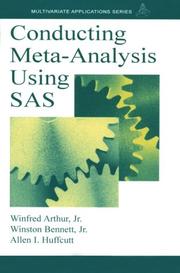 Conducting Meta-Analysis Using SASJr., Winfred Arthur, Winston Bennett · 2001
 Interpreting the medical literatureStephen H. Gehlbach · 1982
 Handbook of Meta-AnalysisChristopher H. Schmid, Theo Stijnen · 2020
- 📕Meta-analysis and combining information in genetics and genomicsRudy Guerra, David B. Allison · 2008
Ranked by number of editions on Open Library, a rough measure of how lasting a book is.
🔗 Related topics
- Study heterogeneity In statistics, (between-) study heterogeneity is a phenomenon that commonly occurs when attempting to undertake a meta-analysis. In a simplistic scenario…
- Meta-regression Meta-regression is a meta-analysis that uses regression analysis to combine, compare, and synthesize research findings from multiple studies while adjusting…
- Publication bias In published academic research, publication bias occurs when the outcome of an experiment or research study biases the decision to publish or otherwise…
- Wolfgang Viechtbauer Wolfgang Viechtbauer is a statistician. He is an associate professor of methodology and statistics at the Maastricht University in the Faculty of Health…
- Combinatorial meta-analysis Combinatorial meta-analysis (CMA) is the study of the behaviour of statistical properties of combinations of studies from a meta-analytic dataset (typically…
- Replication crisis The replication crisis, also known as the reproducibility crisis or replicability crisis, is a widespread phenomenon in which published scientific results…
- Effect size In statistics, an effect size is a quantitative measure of the magnitude and often direction of a phenomenon. It can refer to the value of a statistic…
- Randomized controlled trial A randomized controlled trial (RCT) is a type of statistical experiment designed to evaluate the efficacy or safety of an intervention by minimizing bias…