Everything about Logarithm
Mathematical function, inverse of an exponential function

In mathematics, the logarithm of a number is the exponent by which another fixed value, the base, must be raised to produce that number. For example, the logarithm of 1000 to base 10 is 3, because 1000 is 10 to the 3rd power: 1000 = 103 = 10 × 10 × 10. More generally, if x = by, then y is the logarithm of x to base b, written logb x = y, so log10 1000 = 3. As a single-variable function, the logarithm to base b is the inverse of exponentiation with base b. Wikipedia →
🧭 Start here: a 6-step reading path
- Read the overview: LogarithmA 5-minute orientation
- Skim a recent paper: Modification of the Logarithm Methodology of Additive Weights (LMAW) by a Triangular Fuzzy Number and Its Application in Multi-Criteria Decision MakingInfluential work since 2022
- Pick up a classic book: ElementsThe most-reprinted book on the subject
- Read the landmark paper: THE ESTIMATION AND SIGNIFICANCE OF THE LOGARITHM OF A RATIO OF FREQUENCIESCited 862 times
- Go sideways: List of logarithmic identitiesA closely related topic
- Go sideways: Natural logarithmA closely related topic
📖 Definitions
Noun For a number x, the exponent by which a given base number must be raised in order to obtain the power x. Written logbx. For example, log101000=3 because 103=1000 and log216=4 because 24=16.
🏆 Landmark papers (most cited)
THE ESTIMATION AND SIGNIFICANCE OF THE LOGARITHM OF A RATIO OF FREQUENCIES
Exponentially decreasing distributions for the logarithm of particle size
Constitutive laws for the matrix-logarithm of the conformation tensor
An invariance principle for the law of the iterated logarithm
Illumination compensation and normalization for robust face recognition using discrete cosine transform in logarithm domain
Next-to-next-to-leading logarithm resummation fors-channel single top quark production
On the Distribution of a Variate Whose Logarithm is Normally Distributed
Bearing fault diagnosis via generalized logarithm sparse regularization
🆕 Influential since 2022
Modification of the Logarithm Methodology of Additive Weights (LMAW) by a Triangular Fuzzy Number and Its Application in Multi-Criteria Decision Making
PLAM: A Posit Logarithm-Approximate Multiplier
Performance Analysis of a Repetition Cat Code Architecture: Computing 256-bit Elliptic Curve Logarithm in 9 Hours with 126 133 Cat Qubits
Development and test of highly accurate endpoint free energy methods. 2: Prediction of logarithm of n‐octanol–water partition coefficient (logP) for druglike molecules using MM‐PBSA method
A new exponential-logarithm-based single-valued neutrosophic set and their applications
📚 Books worth reading
 ElementsEuclid · 1482
 The young mathematician's guideJohn Ward (of Chester) · 1707
 Arithmetique made easieEdmund Wingate · 1630
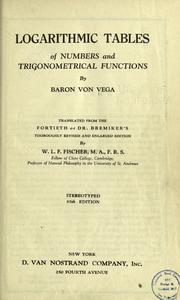 Logarithmisch-trigonometrisches Handbuch.Vega, Georg Freiherr von · 1783
 A new manual of logarithms to seven places of decimalsC. Bruhns · 1881
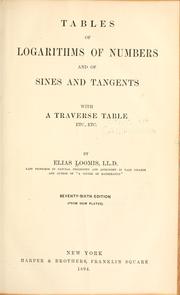 Tables of logarithms of numbers and of sines and tangentsElias Loomis · 1848
 Logarithmic tables of numbers and trigonometrical functionsVega, Georg Freiherr von · 1867
 Mathematical TablesCharles Hutton, Olinthus Gregory · 2012
Ranked by number of editions on Open Library, a rough measure of how lasting a book is.
🔗 Related topics
- List of logarithmic identities In mathematics, many logarithmic identities exist. The following is a compilation of the notable of these, many of which are used for computational purposes…
- Natural logarithm The natural logarithm of a number is its logarithm to the base of the mathematical constant e, which is an irrational and transcendental number approximately…
- Logarithmic growth In mathematics, logarithmic growth describes a phenomenon whose size or cost can be described as a logarithm function of some input. e.g. y = C log (x)…
- Complex logarithm In mathematics, a complex logarithm is a generalization of the natural logarithm to nonzero complex numbers. The term refers to one of the following, which…
- Gaussian logarithm In mathematics, addition and subtraction logarithms or Gaussian logarithms can be utilized to find the logarithms of the sum and difference of a pair of…
- Exponential function In mathematics, the exponential function is the unique real function which maps zero to one and has a derivative everywhere equal to its value. It is denoted…
- Common logarithm In mathematics, the common logarithm (aka "standard logarithm") is the logarithm with base 10. It is also known as the decadic logarithm, the decimal logarithm…
- Binary logarithm In mathematics, the binary logarithm (log2 n) is the power to which the number 2 must be raised to obtain the value n. That is, for any real number x,…