Live briefing

Everything about Learning to read
Acquiring the skills to understand the meaning of written words
Learning to read or reading skills acquisition is the acquisition and practice of the skills necessary to understand the meaning behind printed words. For a skilled reader, the act of reading feels simple, effortless, and automatic. However, the process of learning to read is complex and builds on cognitive, linguistic, and social skills developed from a very early age. As one of the four core language skills, reading is vital to gaining a command of written language. Wikipedia →
🧭 Start here: a 6-step reading path
- Read the overview: Learning to readA 5-minute orientation
- Skim a recent paper: PDE-READ: Human-readable partial differential equation discovery using deep learningInfluential work since 2022
- Pick up a classic book: Cousin Lucy at playThe most-reprinted book on the subject
- Read the landmark paper: Learning To Read and Learning To SpellCited 347 times
- Go sideways: Synthetic phonicsA closely related topic
- Go sideways: PhonicsA closely related topic
📖 Definitions
No dictionary entry for this exact phrase.
🏆 Landmark papers (most cited)
Learning To Read and Learning To Spell
Learning to Read
Learning to Read Biology
Multi-sensory learning and learning to read
Learning to Read Words
Learning to read and learning to comprehend
Learning to Read Nature
Learning to read in Turkish
🆕 Influential since 2022
PDE-READ: Human-readable partial differential equation discovery using deep learning
Learning to read Chinese: the roles of phonological awareness, paired–associate learning, and phonetic radical awareness
Learning to Read and Developmental Dyslexia in Hebrew
Learning to read and interpret tattoos
Contribution of statistical learning in learning to read across languages
📚 Books worth reading
 Cousin Lucy at playJacob Abbott · 1841
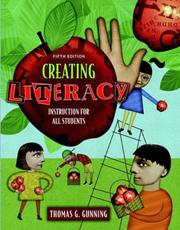 Creating literacy instruction for all studentsThomas G. Gunning · 2004
 Differentiated Reading InstructionJules Csillag · 2016
 What every school leader needs to know about RTIMargaret Searle · 2010
 Oxford Reading Tree Read with Biff Chip & KipperRoderick Hunt · 2016
 I Can Write!Dr. Seuss, Roy McKie · 1971
- 📕RTI for reading at the secondary levelDeborah K. Reed · 2012
 RTIKaren A. Kemp, Karen A. Kemp · 2007
Ranked by number of editions on Open Library, a rough measure of how lasting a book is.
🔗 Related topics
- Synthetic phonics Synthetic phonics, also known as blended phonics or inductive phonics, is a method of teaching English reading which first teaches letter-sounds (grapheme/phone…
- Phonics This article contains phonetic transcriptions in the International Phonetic Alphabet (IPA). For an introductory guide on IPA symbols, see Help:IPA. For…
- History of learning to read The history of learning to read dates back to the invention of writing during the 4th millennium BC. Concerning the English language in the United States…
- Reading for special needs Reading for special needs has become an area of interest as the understanding of reading has improved. Teaching children with special needs how to read…
- Whole language Whole language is a discredited philosophy of reading and an educational method originally developed for teaching literacy in English to young children…
- Teaching reading Teaching reading has significant differences between teaching reading for alphabetic languages and for logographic languages. Educators have debated for…
- Science of reading The science of reading (SoR) is the discipline that studies the objective investigation and accumulation of reliable evidence about how humans learn to…
- Emergent literacies Emergent literacy is a term that is used to explain a child's knowledge of reading and writing skills before they learn how to read and write words. It…