Live briefing

Everything about Science of reading
Study of reading and its acquisition
The science of reading (SoR) is the discipline that studies the objective investigation and accumulation of reliable evidence about how humans learn to read and how reading should be taught. It draws on many fields, including cognitive science, developmental psychology, education, educational psychology, special education, and more. Wikipedia →
🧭 Start here: a 6-step reading path
- Read the overview: Science of readingA 5-minute orientation
- Skim a recent paper: Expanding the science of reading: Contributions from educational psychologyInfluential work since 2022
- Pick up a classic book: Moby DickThe most-reprinted book on the subject
- Read the landmark paper: The Science of Reading Comprehension InstructionCited 141 times
- Go sideways: PhonicsA closely related topic
- Go sideways: Synthetic phonicsA closely related topic
📖 Definitions
No dictionary entry for this exact phrase.
🗂️ The subject at a glance
- Foundational skills instruction in the United States
- Simple view of reading
- Scarborough's Reading Rope
- Active view of reading model
- Automaticity
- How the brain reads
- Eye movement and silent reading rate
- Dual-route hypothesis to reading aloud
- The production effect (reading out loud)
- Multisensory learning
- Explicit instruction vs. implicit instruction
- Evidence-based reading instruction
🏆 Landmark papers (most cited)
The Science of Reading Comprehension Instruction
Is the Science of Reading Just the Science of Reading English?
Reading Wars, Reading Science, and English Learners
Cognitive Science Meets Beginning Reading
Alphabetism in reading science
What Science Offers Teachers of Reading
The Cognitive Science of Reading
Why Sociocultural Context Matters in the Science of Reading and the Reading of Science: Revisiting the Science Discovery Narrative
🆕 Influential since 2022
Expanding the science of reading: Contributions from educational psychology
Machine learning, meaning making: On reading computer science texts
The Science of Teaching Reading is Incomplete without the Science of Writing: A Randomized Control Trial of Integrated Teaching of Reading and Writing
Toward a culturally sustaining science of reading
Open developmental science: An overview and annotated reading list
📚 Books worth reading
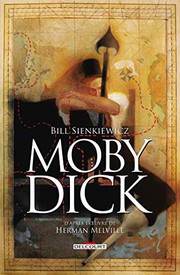 Moby DickHerman Melville · 1851
 Romeo and JulietWilliam Shakespeare · 1597
 Nineteen Eighty-FourGeorge Orwell · 1949
 Brave New WorldAldous Huxley · 1932
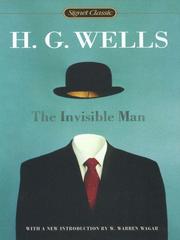 The Invisible ManH. G. Wells
 Harry Potter and the Philosopher's StoneJ. K. Rowling · 1997
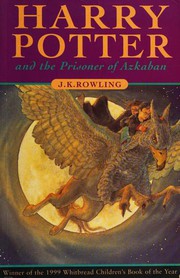 Harry Potter and the Prisoner of AzkabanJ. K. Rowling · 1999
 The Hunger GamesSuzanne Collins · 2008
Ranked by number of editions on Open Library, a rough measure of how lasting a book is.
🔗 Related topics
- Phonics This article contains phonetic transcriptions in the International Phonetic Alphabet (IPA). For an introductory guide on IPA symbols, see Help:IPA. For…
- Synthetic phonics Synthetic phonics, also known as blended phonics or inductive phonics, is a method of teaching English reading which first teaches letter-sounds (grapheme/phone…
- Teaching reading Teaching reading has significant differences between teaching reading for alphabetic languages and for logographic languages. Educators have debated for…
- Systematic phonics Systematic phonics is an umbrella term used to describe phonics approaches that are taught explicitly and in a structured, systematic manner. They are…
- Whole language Whole language is a discredited philosophy of reading and an educational method originally developed for teaching literacy in English to young children…
- History of learning to read The history of learning to read dates back to the invention of writing during the 4th millennium BC. Concerning the English language in the United States…
- Balanced literacy Balanced literacy is an approach to teaching reading and writing the English language that arose in the 1990s and has a variety of interpretations. Its…
- Management of dyslexia Management of dyslexia depends on a multitude of variables; there is no one specific strategy or set of strategies that will work for all who have dyslexia…