Everything about Las Vegas algorithm
Type of randomized algorithm
In computing, a Las Vegas algorithm is a randomized algorithm that always gives correct results; that is, it always produces the correct result or it informs about the failure. However, the runtime of a Las Vegas algorithm differs depending on the input. The usual definition of a Las Vegas algorithm includes the restriction that the expected runtime be finite, where the expectation is carried out over the space of random information, or entropy, used in the algorithm. An alternative definition requires that a Las Vegas algorithm always terminates, but may output a symbol not part of the solution space to indicate failure in finding a solution. The nature of Las Vegas algorithms makes them suitable in situations where the number of possible solutions is limited, and where verifying the correctness of a candidate solution is relatively easy while finding a solution is complex. Wikipedia →
🧭 Start here: a 6-step reading path
- Read the overview: Las Vegas algorithmA 5-minute orientation
- Skim a recent paper: Las Vegas algorithm in the prediction of intrinsic solubility of drug-like compoundsInfluential work since 2022
- Pick up a classic book: Applied algebra, algebraic algorithms and error-correcting codesThe most-reprinted book on the subject
- Read the landmark paper: A fast las vegas algorithm for triangulating a simple polygonCited 37 times
- Go sideways: Randomized algorithmA closely related topic
- Go sideways: Monte Carlo algorithmA closely related topic
📖 Definitions
No dictionary entry for this exact phrase.
🏆 Landmark papers (most cited)
A fast las vegas algorithm for triangulating a simple polygon
A las vegas rnc algorithm for maximum matching
Short Note: A Las Vegas graph Colouring Algorithm
An empirically fast Las Vegas algorithm for algebraic shifting
🆕 Influential since 2022
Las Vegas algorithm in the prediction of intrinsic solubility of drug-like compounds
QSPR models for water solubility of organic compounds using correlation intensity index and Las Vegas algorithm
A Hybrid Approach to Questionnaire Generation Using Las Vegas Algorithm and Naive Bayes Algorithm
Simulation of fish chronic toxicity using the Las Vegas algorithm and the vector of ideality of correlation
An Analysis of Las Vegas Algorithms for Linear Search
📚 Books worth reading
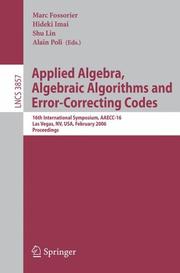 Applied algebra, algebraic algorithms and error-correcting codesMarc Fossorier, Hideki Imai · 2003
 GECCO-2000Genetic and Evolutionary Computation Conference (2000 Las Vegas, Nev.) · 2000
 Finite fieldsInternational Conference on Finite Fields : Theory, Applications, and Algorithms (2nd 1993 Las Vegas, Nev.), Applications, and Algorithms (4th : 1997 : University of Waterloo) International Conference on Finite Fields: Theory · 1994
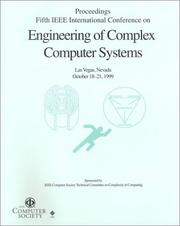 Fifth IEEE International Conference on Engineering of Complex Computer Systems (ICECCS'99)IEEE International Conference on Engineering of Complex Computer Systems (5th 1999 Las Vegas, Nevada, USA), IEEE Computer Society · 1999
 The challenges of systems biologyGustavo Stolovitzky · 2009
 SPAA 2005ACM Symposium on Parallelism in Algorithms and Architectures (17th 2005 Las Vegas, Nev.) · 2005
- 📕Recent advances in scientific computing and applicationsNev.) International Conference on Scientific Computing and Applications (8th 2012 Las Vegas · 2013
 Icomp 2015Nev.) International Conference on Internet Computing and Big Data (2015 Las Vegas · 2016
Ranked by number of editions on Open Library, a rough measure of how lasting a book is.
🔗 Related topics
- Randomized algorithm A randomized algorithm is an algorithm that employs a degree of randomness as part of its logic or procedure. The algorithm typically uses uniformly random…
- Monte Carlo algorithm In computing, a Monte Carlo algorithm is a randomized algorithm whose output may be incorrect with a certain (typically small) probability. Two examples…
- Cross-entropy method The cross-entropy (CE) method is a Monte Carlo method for importance sampling and optimization. It is applicable to both combinatorial and continuous problems…
- Quicksort Quicksort is an efficient, general-purpose sorting algorithm. Quicksort was developed by British computer scientist Tony Hoare in 1959 and published in…
- Gibbs sampling In statistics, Gibbs sampling or a Gibbs sampler, also known in statistical mechanics as the heat bath algorithm, is a Markov chain Monte Carlo (MCMC)…
- Metropolis–Hastings algorithm In statistics and statistical physics, the Metropolis–Hastings algorithm is a Markov chain Monte Carlo (MCMC) method for obtaining a sequence of random…
- Merge sort Merge sort (also commonly spelled as mergesort or merge-sort) is an efficient, general-purpose, comparison-based sorting algorithm. Most implementations…
- Spreadsort Spreadsort is a sorting algorithm invented by Steven J. Ross in 2002. It combines concepts from distribution-based sorts, such as radix sort and bucket…