Everything about Language equation
Language equations are mathematical statements that resemble numerical equations, but the variables assume values of formal languages rather than numbers. Instead of arithmetic operations in numerical equations, the variables are joined by language operations. Among the most common operations on two languages A and B are the set union A ∪ B, the set intersection A ∩ B, and the concatenation A⋅B. Finally, as an operation taking a single operand, the set A* denotes the Kleene star of the language A. Therefore, language equations can be used to represent formal grammars, since the languages generated by the grammar must be the solution of a system of language equations. Wikipedia →
🧭 Start here: a 6-step reading path
- Read the overview: Language equationA 5-minute orientation
- Skim a recent paper: Partial Least Squares Structural Equation Modeling (PLS-SEM) in second language and education research: Guidelines using an applied exampleInfluential work since 2022
- Pick up a classic book: Structural equation modeling with AMOSThe most-reprinted book on the subject
- Read the landmark paper: An introduction to structural equation modelling for language assessment researchCited 183 times
- Go sideways: State complexityA closely related topic
- Go sideways: Conjunctive grammarA closely related topic
📖 Definitions
No dictionary entry for this exact phrase.
🏆 Landmark papers (most cited)
An introduction to structural equation modelling for language assessment research
EXPLORATORY STRUCTURAL EQUATION MODELING IN SECOND LANGUAGE RESEARCH
Transport in molecular states language: Generalized quantum master equation approach
Structural Equation Modeling in Language Testing and Learning Research: A Review
Structural Equation Modeling Reporting Practices for Language Assessment
Structural Equation Modeling: Possibilities for Language Learning Researchers1
Relationships Among Second Language Proficiency, Foreign Language Aptitude, and Intelligence: A Structural Equation Modeling Approach
Models of second language competence: a structural equation approach
🆕 Influential since 2022
Partial Least Squares Structural Equation Modeling (PLS-SEM) in second language and education research: Guidelines using an applied example
Sources and effects of foreign language enjoyment, anxiety, and boredom: A structural equation modeling approach
English as a foreign language teachers’ professional success, loving pedagogy and creativity: A structural equation modeling approach
A structural equation modeling approach in examining EFL students’ foreign language enjoyment, trait emotional intelligence, and classroom climate
Large language models for automatic equation discovery of nonlinear dynamics
📚 Books worth reading
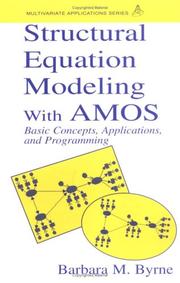 Structural equation modeling with AMOSBarbara M Byrne, Barbara Byrne · 2000
 Computational physics, FORTRAN versionSteven E. Koonin · 1986
 Differential EquationsSteven Krantz · 2020
 Advanced Spatial Modeling with Stochastic Partial Differential Equations Using R and INLAElias T. Krainski, Virgilio Gómez-Rubio · 2018
 Solving PDEs in C++Yair Shapira, Yair Shapira · 2006
 Numerical Analysis Using RGraham W. Griffiths · 2016
 Recent Advances in Algorithmic DifferentiationShaun Forth · 2012
- 📕A vectorized Fokker-Planck package for the CRAY-1M. G. McCoy · 1979
Ranked by number of editions on Open Library, a rough measure of how lasting a book is.
🔗 Related topics
- State complexity State complexity is an area of theoretical computer science dealing with the size of abstract automata, such as different kinds of finite automata. The…
- Conjunctive grammar Conjunctive grammars are a class of formal grammars studied in formal language theory. They extend the basic type of grammars, the context-free grammars…
- Word equation A word equation is a formal equality E:=u=⋅v between a pair of words u and v, each over an alphabet Σ∪Ξ comprising both constants (cf. Σ) and unknowns…
- Boolean grammar Boolean grammars, introduced by Okhotin [Wikidata], are a class of formal grammars studied in formal language theory. They extend the basic type of grammars…
- Minimum relevant variables in linear system Minimum relevant variables in linear system (Min-RVLS) is a problem in mathematical optimization. Given a linear program, it is required to find a feasible…
- Simply typed lambda calculus The simply typed lambda calculus ( λ → {\displaystyle \lambda ^{\to }} ), a form of type theory, is a typed interpretation of the lambda calculus with…
- Finite element method Finite element method (FEM) is a popular method for numerically solving differential equations arising in engineering and mathematical modeling. Typical…
- Primitive recursive arithmetic Primitive recursive arithmetic (PRA) is a quantifier-free formalization of the natural numbers. It was first proposed by Norwegian mathematician Skolem…