Everything about Primitive recursive arithmetic
Formalization of the natural numbers
Primitive recursive arithmetic (PRA) is a quantifier-free formalization of the natural numbers. It was first proposed by Norwegian mathematician Skolem (1923), as a formalization of his finitistic conception of the foundations of arithmetic, and it is widely agreed that all reasoning of PRA is finitistic. Many also believe that all of finitism is captured by PRA, but others believe finitism can be extended to forms of recursion beyond primitive recursion, up to ε0, which is the proof-theoretic ordinal of Peano arithmetic. PRA's proof theoretic ordinal is ωω, where ω is the smallest transfinite ordinal. PRA is sometimes called Skolem arithmetic, although that has another meaning, see Skolem arithmetic. Wikipedia →
🧭 Start here: a 6-step reading path
- Read the overview: Primitive recursive arithmeticA 5-minute orientation
- Skim a recent paper: The nonarithmeticity of the predicate logic of primitive recursive realizabilityInfluential work since 2022
- Pick up a classic book: Java software solutionsThe most-reprinted book on the subject
- Read the landmark paper: Provable equality in primitive recursive arithmetic with and without inductionCited 3 times
- Go sideways: Primitive recursive functionA closely related topic
- Go sideways: Church's thesis (constructive mathematics)A closely related topic
📖 Definitions
No dictionary entry for this exact phrase.
🗂️ The subject at a glance
🏆 Landmark papers (most cited)
Provable equality in primitive recursive arithmetic with and without induction
Arithmetical realizability and primitive recursive realizability
Proof of the quadratic reciprocity law in primitive recursive arithmetic.
A Note on the Recursive Unsolvability of Primitive Recursive Arithmetic
A Free‐Variable Theory of Primitive Recursive Arithmetic
On the Equivalence Between Logic‐Free and Logic‐Bearing Systems of Primitive Recursive Arithmetic
A note on the recursive unsolvability of primitive recursive arithmetic
On some generalizations of the primitive recursive arithmetic
🆕 Influential since 2022
📚 Books worth reading
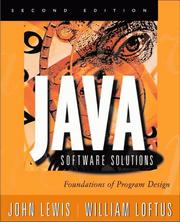 Java software solutionsLewis, John, John E. Lewis Ph. D. · 1997
 Starting Out with JavaTony Gaddis · 2004
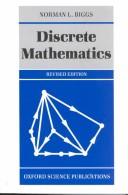 Discrete mathematicsNorman Biggs · 1985
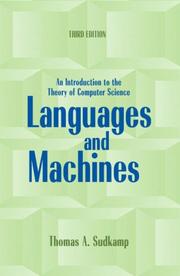 Languages and machinesThomas A. Sudkamp · 1988
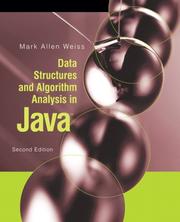 Data structures & algorithm analysis in JavaMark Allen Weiss · 1999
 An introduction to data structures with applicationsJean-Paul Tremblay, Paul Gordon Sorenson · 1976
 Computer algorithmsEllis Horowitz · 1997
 Programming in HaskellGraham Hutton · 2007
Ranked by number of editions on Open Library, a rough measure of how lasting a book is.
🔗 Related topics
- Primitive recursive function In computability theory, a primitive recursive function is, roughly speaking, a function that can be computed by a computer program whose loops are all…
- Church's thesis (constructive mathematics) In constructive mathematics, Church's thesis C T {\displaystyle {\mathrm {CT} }} is the principle stating that all total functions are computable functions…
- Ground expression In mathematical logic, a ground term of a formal system is a term that does not contain any variables. Similarly, a ground formula is a formula that does…
- Von Neumann–Bernays–Gödel set theory In the foundations of mathematics, von Neumann–Bernays–Gödel set theory (NBG) is an axiomatic set theory that is a conservative extension of Zermelo–Fraenkel–ch…
- Independence-friendly logic Independence-friendly logic (IF logic; proposed by Jaakko Hintikka and Gabriel Sandu [fr] in 1989) is an extension of classical first-order logic (FOL)…
- Computation in the limit In computability theory, a function is called limit computable if it is the limit of a uniformly computable sequence of functions. The terms computable…
- Constant-recursive sequence In mathematics, an infinite sequence of numbers s 0 , s 1 , s 2 , s 3 , … {\displaystyle s_{0},s_{1},s_{2},s_{3},\ldots } is called constant-recursive…
- Kripke–Platek set theory Kripke–Platek set theory (KP) is an axiomatic set theory developed by Saul Kripke and Richard Platek. It is substantially weaker than Zermelo–Fraenkel…