Live briefing
Everything about Language acquisition
Process in which a first language is acquired
Language acquisition is the process by which humans acquire the capacity to perceive and comprehend language. In other words, it is how human beings gain the ability to be aware of language, to understand it, and to produce and use words and sentences to communicate. Wikipedia →
🧭 Start here: a 6-step reading path
- Read the overview: Language acquisitionA 5-minute orientation
- Skim a recent paper: Communicative Feedback in language acquisitionInfluential work since 2022
- Pick up a classic book: The Language InstinctThe most-reprinted book on the subject
- Read the landmark paper: Reading Acquisition, Developmental Dyslexia, and Skilled Reading Across Languages: A Psycholinguistic Grain Size Theory.Cited 2,228 times
- Go sideways: Language developmentA closely related topic
- Go sideways: Bootstrapping (linguistics)A closely related topic
📖 Definitions
No dictionary entry for this exact phrase.
🏆 Landmark papers (most cited)
Reading Acquisition, Developmental Dyslexia, and Skilled Reading Across Languages: A Psycholinguistic Grain Size Theory.
First-Language Acquisition After Childhood Differs From Second-Language Acquisition
Language Acquisition Meets Language Evolution
Bootstrapping language acquisition
Language Acquisition is Language Change
Ancestral Language Acquisition
Children's language acquisition.
Third language acquisition
🆕 Influential since 2022
Communicative Feedback in language acquisition
The relation of second language acquisition, instructed second language acquisition, and language teaching from the lens of second language tense-aspect
Instructed Second Language Acquisition and Second Language Pronunciation
Revolutionizing Language Learning: How AI Bots Enhance Language Acquisition
Language and Brain: Neurological Aspects in Language Acquisition
📚 Books worth reading
 The Language InstinctSteven Pinker · 1994
 Langage et la pensée chez l'enfantJean Piaget · 1926
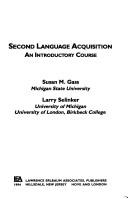 Second language acquisitionSusan M. Gass, Larry Selinker · 1994
 Second language learning theoriesRosamond Mitchell, Florence Myles · 1998
 Born to talkLloyd M. Hulit, Merle R. Howard · 1992
 Early childhood experiences in language artsJeanne M. Machado · 1975
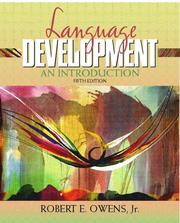 Language DevelopmentRobert E. Owens · 1984
 Through the language glassGuy Deutscher · 2010
Ranked by number of editions on Open Library, a rough measure of how lasting a book is.
🔗 Related topics
- Language development Language development in humans is a process which starts early in life. Infants start without knowing a language, yet by 10 months, babies can distinguish…
- Bootstrapping (linguistics) Bootstrapping is a term used in language acquisition in the field of linguistics. It refers to the idea that humans are born innately equipped with a mental…
- Psychological nativism In the field of psychology, nativism is the view that certain skills or abilities are "native" or hard-wired into the brain at birth. This is in contrast…
- Syntactic bootstrapping Syntactic bootstrapping is a theory in developmental psycholinguistics and language acquisition which proposes that children learn word meanings by recognizing…
- Statistical language acquisition Statistical language acquisition, a branch of developmental psycholinguistics, studies the process by which humans develop the ability to perceive, produce…
- Developmental linguistics Developmental linguistics is the study of the development of linguistic ability in an individual, particularly the acquisition of language in childhood…
- Critical period hypothesis The critical period hypothesis is a hypothesis within the field of linguistics and second language acquisition that claims a person can achieve native-like…
- Psycholinguistics Psycholinguistics or psychology of language is the study of the interrelation between linguistic factors and other aspects of mind and brain. The discipline…