Everything about Syntactic bootstrapping
Theory about language acquisition
Syntactic bootstrapping is a theory in developmental psycholinguistics and language acquisition which proposes that children learn word meanings by recognizing syntactic categories and the structure of their language. It is proposed that children have innate knowledge of the links between syntactic and semantic categories and can use these observations to make inferences about word meaning. Learning words in one's native language can be challenging because the extralinguistic context of use does not give specific enough information about word meanings. Therefore, in addition to extralinguistic cues, conclusions about syntactic categories are made which then lead to inferences about a word's meaning. This theory aims to explain the acquisition of lexical categories such as verbs, nouns, etc. and functional categories such as case markers, determiners, etc. Wikipedia →
🧭 Start here: a 6-step reading path
- Read the overview: Syntactic bootstrappingA 5-minute orientation
- Skim a recent paper: Syntactic bootstrapping as a mechanism for language learningInfluential work since 2022
- Pick up a classic book: Crosslinguistic perspectives on argument structureThe most-reprinted book on the subject
- Read the landmark paper: The use of multiple frames in verb learning via syntactic bootstrappingCited 138 times
- Go sideways: Semantic bootstrappingA closely related topic
- Go sideways: Bootstrapping (linguistics)A closely related topic
📖 Definitions
No dictionary entry for this exact phrase.
🏆 Landmark papers (most cited)
The use of multiple frames in verb learning via syntactic bootstrapping
Bootstrapping Lexical and Syntactic Acquisition
Reflections on Phonological Bootstrapping: Its Role for Lexical and Syntactic Acquisition
Bootstrapping parsers via syntactic projection across parallel texts
Syntactic bootstrapping
Input to verb learning: Evidence for the plausibility of syntactic bootstrapping.
The Input to Verb Learning in Mandarin Chinese: A Role for Syntactic Bootstrapping.
The Developmental Origins of Syntactic Bootstrapping
🆕 Influential since 2022
Syntactic bootstrapping as a mechanism for language learning
Being pragmatic about syntactic bootstrapping
Thematic Content, Not Number Matching, Drives Syntactic Bootstrapping
Syntactic bootstrapping with clausal complements of adjectives
There might be more to syntactic bootstrapping than being pragmatic: A look at grammatical person and prosody in naturalistic child-directed speech
📚 Books worth reading
 Crosslinguistic perspectives on argument structureMelissa Bowerman, Penelope Brown · 2007
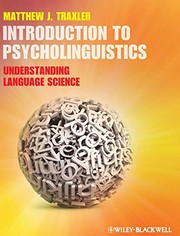 Introduction to psycholinguisticsMatthew J. Traxler · 2011
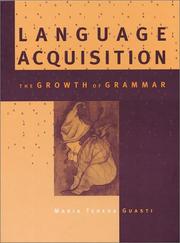 Language AcquisitionMaria Teresa Guasti · 2002
 System softwareLeland L. Beck · 1985
 Approaches to BootstrappingBarbara Höhle · 2001
 Issues in the theory of language acquisitionNorbert Dittmar, Zvi Penner · 1997
 Approaches to bootstrappingBarbara Höhle · 2000
- 📕The earliest stage in the acquisition of the nominal phrase in Bernese Swiss GermanZvi Penner · 1993
Ranked by number of editions on Open Library, a rough measure of how lasting a book is.
🔗 Related topics
- Semantic bootstrapping Semantic bootstrapping is a linguistic theory of child language acquisition which proposes that children can acquire the syntax of a language by first…
- Bootstrapping (linguistics) Bootstrapping is a term used in language acquisition in the field of linguistics. It refers to the idea that humans are born innately equipped with a mental…
- Sentence word A sentence word (also called a one-word sentence) is a single word that forms a full sentence. Henry Sweet described sentence words as 'an area under one's…
- Prosodic bootstrapping Prosodic bootstrapping (also known as phonological bootstrapping) in linguistics refers to the hypothesis that learners of a primary language (L1) use…
- Mental lexicon The mental lexicon is a component of the human language faculty that contains information regarding the composition of words, such as their meanings, pronunciat…
- Phrase In grammar, a phrase — called an expression in some contexts — is a group of one or more words acting as a grammatical unit. It can be used within a sentence…
- Language development Language development in humans is a process which starts early in life. Infants start without knowing a language, yet by 10 months, babies can distinguish…
- Linguistic performance The term linguistic performance was used by Noam Chomsky in 1960 to describe "the actual use of language in concrete situations". It is used to describe…