Everything about Natural logarithm
Logarithm to the base of the mathematical constant e

The natural logarithm of a number is its logarithm to the base of the mathematical constant e, which is an irrational and transcendental number approximately equal to 2.718. The natural logarithm of x is generally written as ln x, loge x, or sometimes, if the base e is implicit, simply log x. Parentheses are sometimes added for clarity, giving ln(x), loge(x), or log(x). This is done particularly when the argument to the logarithm is not a single symbol, so as to prevent ambiguity. Wikipedia →
🧭 Start here: a 6-step reading path
- Read the overview: Natural logarithmA 5-minute orientation
- Skim a recent paper: Low-permittivity LiLn(PO 3 ) 4 (Ln = La, Sm, Eu) dielectric ceramics for microwave/millimeter-wave communicationInfluential work since 2022
- Pick up a classic book: Tolstoy on educationThe most-reprinted book on the subject
- Read the landmark paper: A threshold of ln n for approximating set coverCited 2,168 times
- Go sideways: List of logarithmic identitiesA closely related topic
- Go sideways: LogarithmA closely related topic
📖 Definitions
Symbol natural logarithm; logarithm to the base e.
Symbol ISO 639-1 language code for Lingala.
Noun Abbreviation of lane.
🏆 Landmark papers (most cited)
A threshold of ln n for approximating set cover
Current advances in lanthanide ion (Ln 3+ )-based upconversion nanomaterials for drug delivery
Effect of Structural Parameters on Superconductivity in Fluorine-Free LnFeAsO1-y (Ln = La, Nd)
Bright White Light through Up-Conversion of a Single NIR Source from Sol−Gel-Derived Thin Film Made with Ln3+-Doped LaF3 Nanoparticles
Mononuclear Lanthanide Single Molecule Magnets Based on the Polyoxometalates [Ln(W5O18)2]9− and [Ln(β2-SiW11O39)2]13−(LnIII = Tb, Dy, Ho, Er, Tm, and Yb)
Highly Uniform and Monodisperse β-NaYF4:Ln3+ (Ln = Eu, Tb, Yb/Er, and Yb/Tm) Hexagonal Microprism Crystals: Hydrothermal Synthesis and Luminescent Properties
Wet-Chemical Synthesis of Doped Colloidal Nanoparticles: YVO 4 :Ln (Ln = Eu, Sm, Dy)
Ruthenium-based layered cuprates RuSr2LnCu2O8 and RuSr2(Ln1+xCe1−x)Cu2O10 (LnSm, Eu and Gd)
🆕 Influential since 2022
Low-permittivity LiLn(PO 3 ) 4 (Ln = La, Sm, Eu) dielectric ceramics for microwave/millimeter-wave communication
Real‐Time In Situ Volatile Organic Compound Sensing by a Dual‐Emissive Polynuclear Ln‐MOF with Pronounced Ln III Luminescence Response
Dynamic Anticounterfeiting Through Novel Photochromic Spiropyran-Based Switch@Ln-MOF Composites
Luminescent Ln-MOFs for Chemical Sensing Application on Biomolecules
Ln‐MOF‐Based Hydrogel Films with Tunable Luminescence and Afterglow Behavior for Visual Detection of Ofloxacin and Anti‐Counterfeiting Applications
📚 Books worth reading
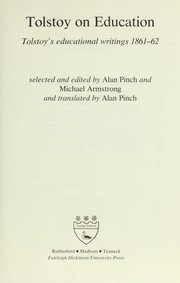 Tolstoy on educationЛев Толстой · 1967
- 📕Muzeĭ L.N. Tolstogo v MoskveKonstantin Nikolaevich Lomunov · 1958
- 📕Dom Lʹva Tolstogo v Moskve v KhamobnikakhA. Opulʹskiĭ · 1967
- 📕Dom v KhamovnikakhMoscow, Russia. Gosudarstvennyĭ muzeĭ L.N. Tolstogo · 1976
- 📕Tolstoy on EducationЛев Толстой, Alan Pinch · 1982
- 📕I͡Asnai͡a Poli͡ana v sudʹbe RossiiS. V. Gaĭdamak · 2010
- 📕I︠A︡snopoli︠a︡nskai︠a︡ shkola imeni L.N. TolstogoN. K. Goncharov · 1960
- 📕The Yasnaya Polyana School, 1859-1862Ruth Meyer Guffee · 1982
Ranked by number of editions on Open Library, a rough measure of how lasting a book is.
🔗 Related topics
- List of logarithmic identities In mathematics, many logarithmic identities exist. The following is a compilation of the notable of these, many of which are used for computational purposes…
- Logarithm In mathematics, the logarithm of a number is the exponent by which another fixed value, the base, must be raised to produce that number. For example, the…
- Tetration In mathematics, tetration (or hyper-4) is an operation based on iterated, or repeated, exponentiation. There is no universal notation for tetration, though…
- Digamma function In mathematics, the digamma function is defined as the logarithmic derivative of the gamma function: ψ(z)=ddzlnΓ(z)=Γ′(z)Γ(z). It is the first of the…
- Multiplicative inverse In mathematics, a multiplicative inverse or reciprocal for a nonzero number x, denoted by 1x or x−1, is a number which when multiplied by x yields the…
- Logarithmic integral function In mathematics, the logarithmic integral function or integral logarithm li(x) is a special function. It is relevant in problems of physics and has number…
- Characterizations of the exponential function In mathematics, the exponential function can be characterized in many ways. This article presents some common characterizations, discusses why each makes…
- Differentiation rules This article is a summary of differentiation rules, that is, rules for computing the derivative of a function in calculus. Unless otherwise stated, all…